


Customer success
Customer success is the proactive business function that helps customers reach agreed outcomes with a product. It begins after the sale, spans the customer lifecycle, and uses evidence of progress or friction to decide what should happen next.
The function is distinct from support. Support responds to questions, defects, and incidents. Customer success looks ahead, coordinates milestones, and intervenes before a missed outcome becomes a renewal surprise. Account management often owns pricing, contracts, and commercial negotiation. In a small SaaS company, one person may cover several roles, but the responsibilities still need clear triggers.
Why customer success matters
Recurring revenue depends on continued customer value. A signed contract shows purchase intent. It does not prove that implementation succeeded, users changed behavior, or the buyer received the expected result.
Customer success makes those gaps visible. It connects the promises made during sales to customer onboarding, adoption, renewal readiness, and appropriate expansion. It also gives product, support, and sales structured evidence about recurring friction and customer needs.
The company may track revenue churn, logo retention, GRR, and NRR. Those are business outcomes with many causes. Customer success influences them, but so do fit, product quality, pricing, sales expectations, support, and contract design.
How customer success works
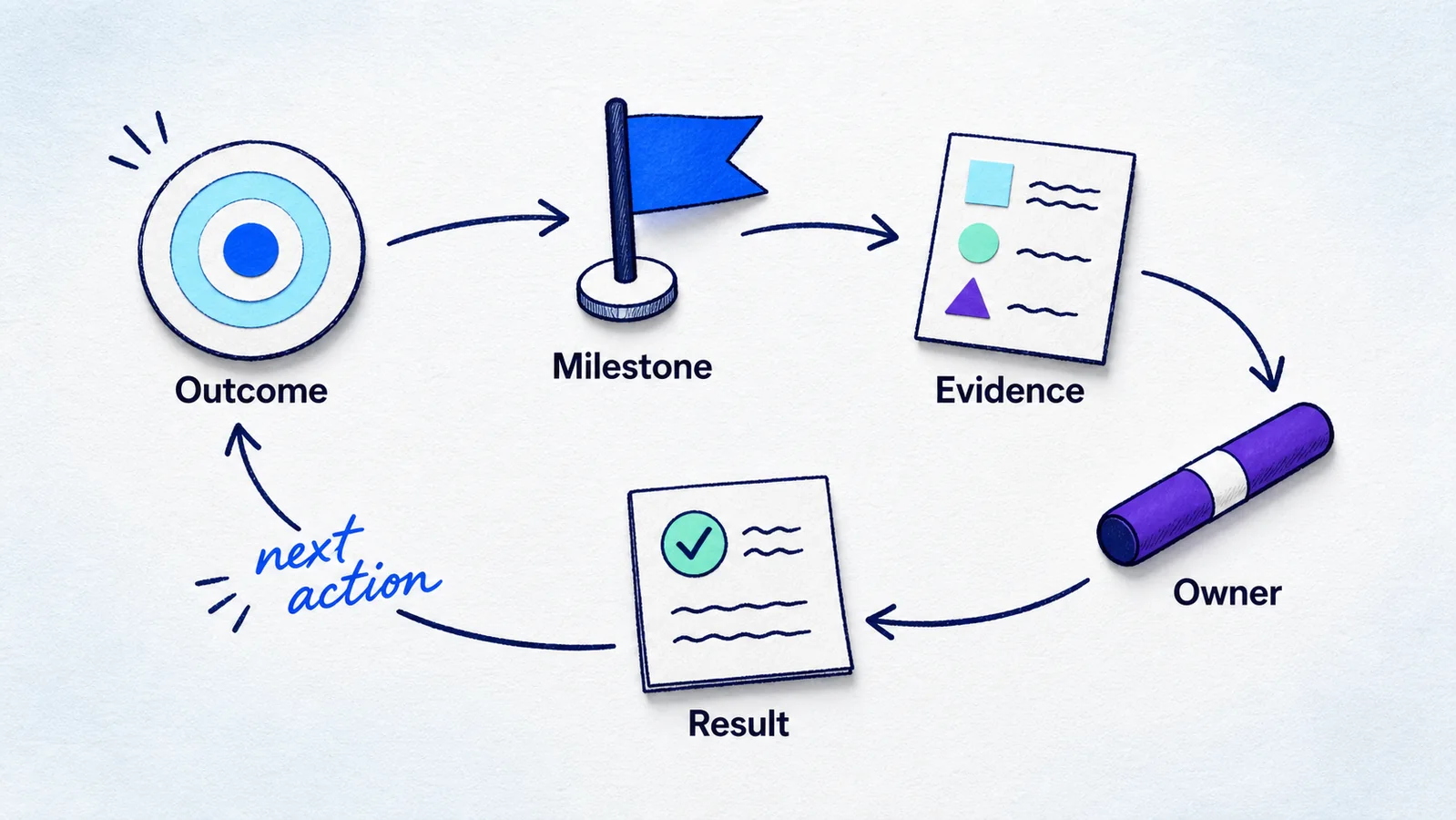
Start with an outcome the customer can recognize. Translate it into milestones and observable evidence. Assign one owner to respond when progress stalls or a new need appears. Record the result so the next action reflects what actually happened.
A useful success plan answers five questions:
- What result does this customer expect?
- Which milestones show progress?
- What evidence signals progress, friction, or risk?
- Who owns the response?
- What result changes the next action?
Health scores, meetings, emails, and business reviews can support this sequence. None of them is the outcome. A score should expose its components. A meeting should resolve a decision, blocker, or next milestone.

SaaS example
Consider an analytics platform sold to revenue teams. The customer's outcome is not "use the dashboard." The expected result is a weekly forecast decision based on trusted data.
Setup includes connecting the CRM and mapping fields. First value occurs when the team publishes a validated forecast view. Adoption means the right participants use that view during the weekly meeting. If the data refresh fails or the forecast owner stops using the view, customer success coordinates diagnosis before renewal.
When another region asks for the same capability, success can qualify the need and pass it into an expansion revenue strategy. The commercial request follows demonstrated value rather than a scheduled upsell date.
Common mistakes
One mistake is renaming support as customer success while keeping every interaction reactive.
Another is measuring CSM activity instead of customer progress. More calls can indicate complexity or unresolved friction.
A third is treating retention as a CS-only responsibility. That hides poor fit, product gaps, weak onboarding, and commercial decisions.
The operator view
Customer success should earn its next action from customer evidence. If every account receives the same call, deck, and renewal sequence regardless of progress, the company has an account-coverage calendar.
The sharper model is smaller: one agreed outcome, visible milestones, specific signals, one owner, and a recorded result. Customer marketing can scale relevant education around that model, but communication should still follow customer state.