


Customer marketing
Customer marketing is the practice of planning communication and programs for existing customers to support adoption, retention, expansion, loyalty, community, and advocacy. It begins after acquisition and uses customer context to decide what the company should offer or explain next.
The audience makes the boundary clear. Acquisition marketing addresses prospective buyers. Customer marketing addresses people and accounts that already use or have purchased the product.
Why customer marketing matters
A signed contract does not guarantee adoption, renewal, or advocacy. Customers still need relevant education, proof of new use cases, product updates, community access, and timely commercial options.
Customer marketing helps a SaaS company communicate at scale without treating every account alike. A new administrator may need setup education. An active team may benefit from an advanced use case. A mature account may be ready to discuss expansion revenue. An inactive account may need diagnosis rather than a promotional message.
These programs can support churn rate, NRR, and LTV, but customer marketing does not control those metrics alone. Product quality, customer success, support, pricing, and account management also shape the outcome.
How customer marketing works
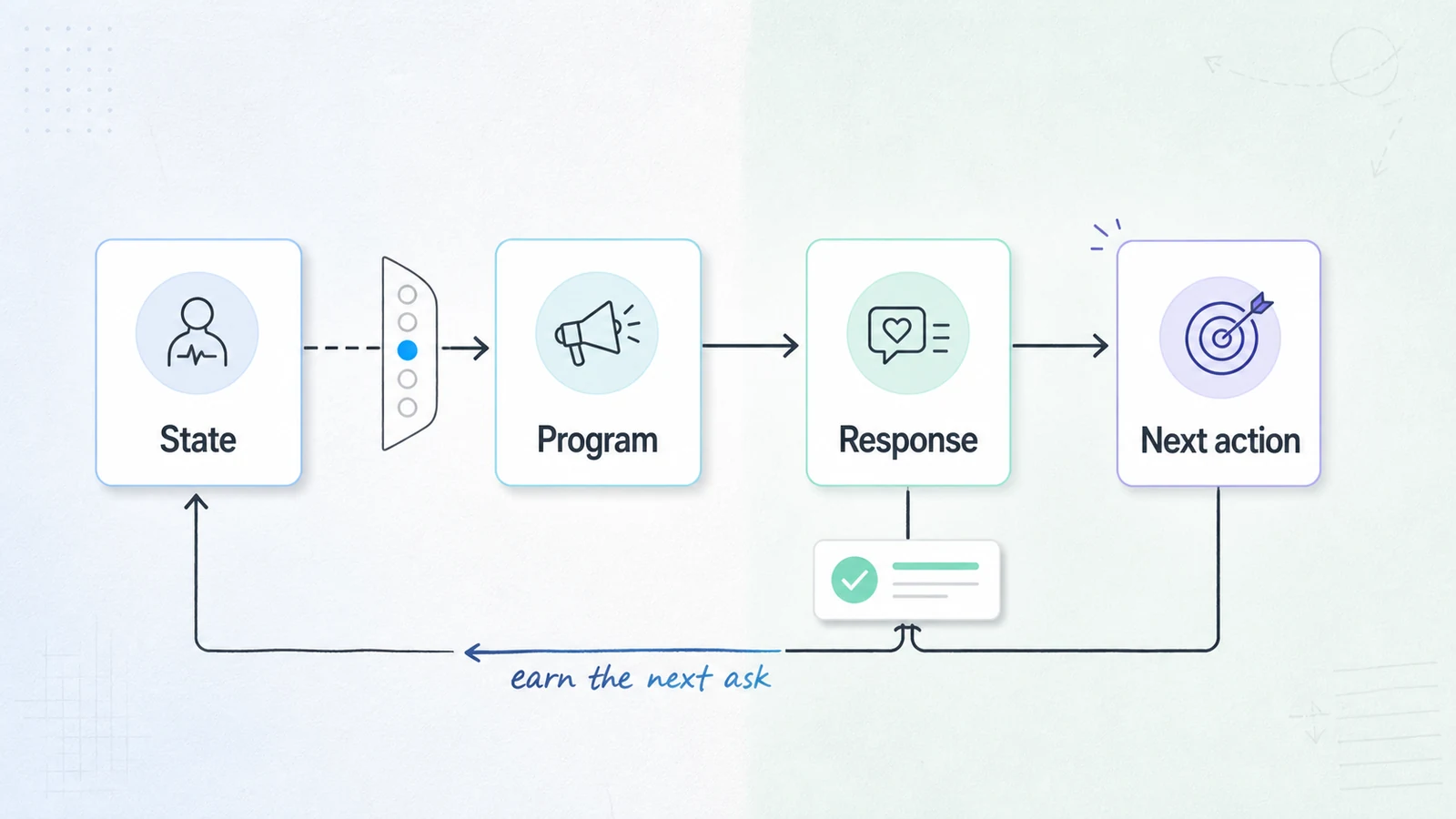
Start with customer state. Useful inputs include onboarding progress, product use, achieved outcomes, account health, renewal timing, support history, stakeholder changes, and expressed interests.
Choose a program that fits that state. Common programs include onboarding education, feature-adoption campaigns, customer newsletters, communities, events, use-case libraries, customer stories, referral programs, expansion education, and win-back communication.
Define the response that should alter the next action. A customer may adopt a feature, join an event, request support, invite teammates, accept a reference call, or show declining activity. That evidence should return to the shared customer record so marketing, success, sales, and product can respond with context.
Customer success usually helps an account achieve its intended outcome and manages adoption or risk directly. Customer marketing builds repeatable communication and programs around customer needs. In a small company, one team may own both, but a campaign should not replace account diagnosis.

SaaS example
Imagine a collaborative analytics product. New customers receive role-specific onboarding and examples that help them publish their first dashboard. Accounts with steady usage receive advanced templates and team-adoption guidance.
When usage spreads to another department, the account may receive education about governance and plan options. If usage falls, the next action should identify the blocked behavior before asking for an upgrade.
The same signals can strengthen a product-led growth motion. Product behavior helps the team separate customers who need education from accounts showing credible expansion or advocacy potential.
Common mistakes
One mistake is reducing customer marketing to case studies and reference calls. Advocacy is one program inside a wider customer discipline.
Another is sending expansion messages before the customer has reached meaningful value.
A third is measuring sends and clicks without inspecting adoption, risk, commercial movement, or customer response.
Customer marketing should earn each next message. The customer's current state and demonstrated value should decide whether the next action is education, assistance, expansion, community, or advocacy.