


MEDDICC
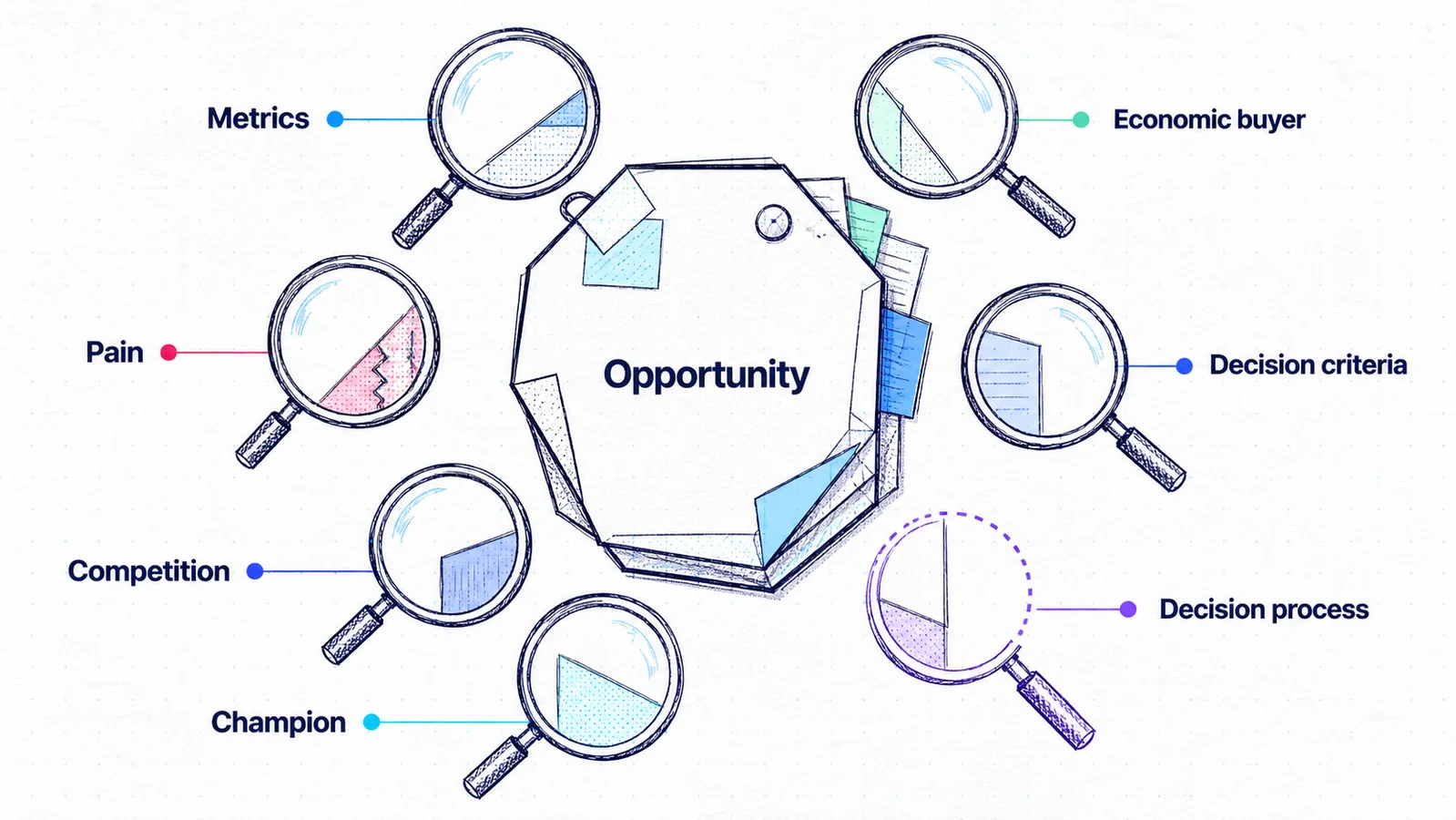
MEDDICC is a sales qualification framework for complex B2B opportunities. It stands for Metrics, Economic Buyer, Decision Criteria, Decision Process, Identify Pain, Champion, and Competition. Teams use those seven categories to inspect deal evidence, expose risk, and decide what to validate next.
The variant names are precise. MEDDIC is the original six-part model. MEDDICC adds Competition. MEDDPICC adds Paper Process to MEDDICC, creating an eight-part model. Paper Process covers procurement, legal, contracting, and the steps from a buying decision to signature.
Why MEDDICC matters
Complex deals can look active while key buying conditions remain unknown. A demo may go well even though the team has not reached the economic buyer, confirmed decision criteria, or tested whether a sales champion can create internal movement.
MEDDICC gives sellers and managers a shared inspection language. It separates quantified value from pain, authority from advocacy, decision criteria from decision process, and the chosen vendor from all forms of competition, including delay or an internal alternative.
That detail supports stronger sales qualification. It does not guarantee a purchase. It makes the current evidence and missing evidence easier to challenge.
How MEDDICC operates
Each category answers a different question:
- Metrics: What measurable result supports the change?
- Economic Buyer: Who can finally approve or stop the investment?
- Decision Criteria: How will the buyer compare options?
- Decision Process: Which people, steps, and events lead to the decision?
- Identify Pain: Which problem and consequence justify action?
- Champion: Who has influence, motivation, and a record of buyer-side action?
- Competition: What else can win the same money, priority, or decision?
Do not require every field to be confirmed during the first conversation. Record the claim, source, confidence, and next validation step. Unknown is a valid state. An unsupported positive entry is not.
Use the categories across the sales pipeline, with evidence expectations that deepen as the buyer advances. MEDDICC is not a sequence of sales stages and is not a discovery script. Discovery produces evidence. MEDDICC organizes that evidence for qualification and inspection.

SaaS example
An infrastructure SaaS company is selling to a regulated enterprise. The operations director confirms a costly deployment delay and agrees on a target metric. A technical committee shares evaluation criteria, but no one has confirmed the final investment authority or the legal path.
The opportunity has useful Metrics, Pain, and Decision Criteria. It still has gaps in Economic Buyer and, if the team uses MEDDPICC, Paper Process. The manager does not mark the whole deal “MEDDICC complete.” The next action is a buyer-side introduction and a contracting-path review before more executive resources are assigned.
The same evidence can inform sales forecasting, but forecast category and qualification status should remain separate. One estimates outcome and timing. The other guides pursuit.
Common mistakes
The first mistake is using MEDDICC, MEDDIC, and MEDDPICC interchangeably. That creates inconsistent fields and coaching.
The second is converting the acronym into a call order. Buyer conversations should follow context, not letter sequence.
The third is rewarding completion percentage. Seven filled fields can still contain seven weak assumptions.
The fourth is treating the champion as a friendly contact or the economic buyer as the most senior title.
Inspect the gap that changes the decision
The useful MEDDICC question is not “How complete is the record?” It is “Which missing or contradicted evidence could change our pursuit decision?” Inspect that gap, assign the next validation step, and revise the opportunity honestly when the buyer's context changes.