


Logo retention
Logo retention is the percentage of customer accounts from the start of a period that remain customers at the end. In B2B SaaS, each customer company is treated as one logo, regardless of how many users or how much revenue it contributes.
Logo retention is also called customer retention. It measures account survival, not brand recognition, renewal value, or recurring revenue retained.
Why logo retention matters
Revenue metrics can hide account loss when expansion from a few large customers offsets many smaller cancellations. Logo retention exposes whether the customer base itself is shrinking.
That makes it useful alongside NRR. NRR may exceed 100% while logo retention declines, because retained customers are spending more even as other accounts leave. Neither metric is wrong. They answer different questions.
Logo retention also helps teams compare acquisition cohorts, plans, and customer segments. A channel that creates many customers but retains few of them may be less valuable than its initial pipeline suggests.
How logo retention works
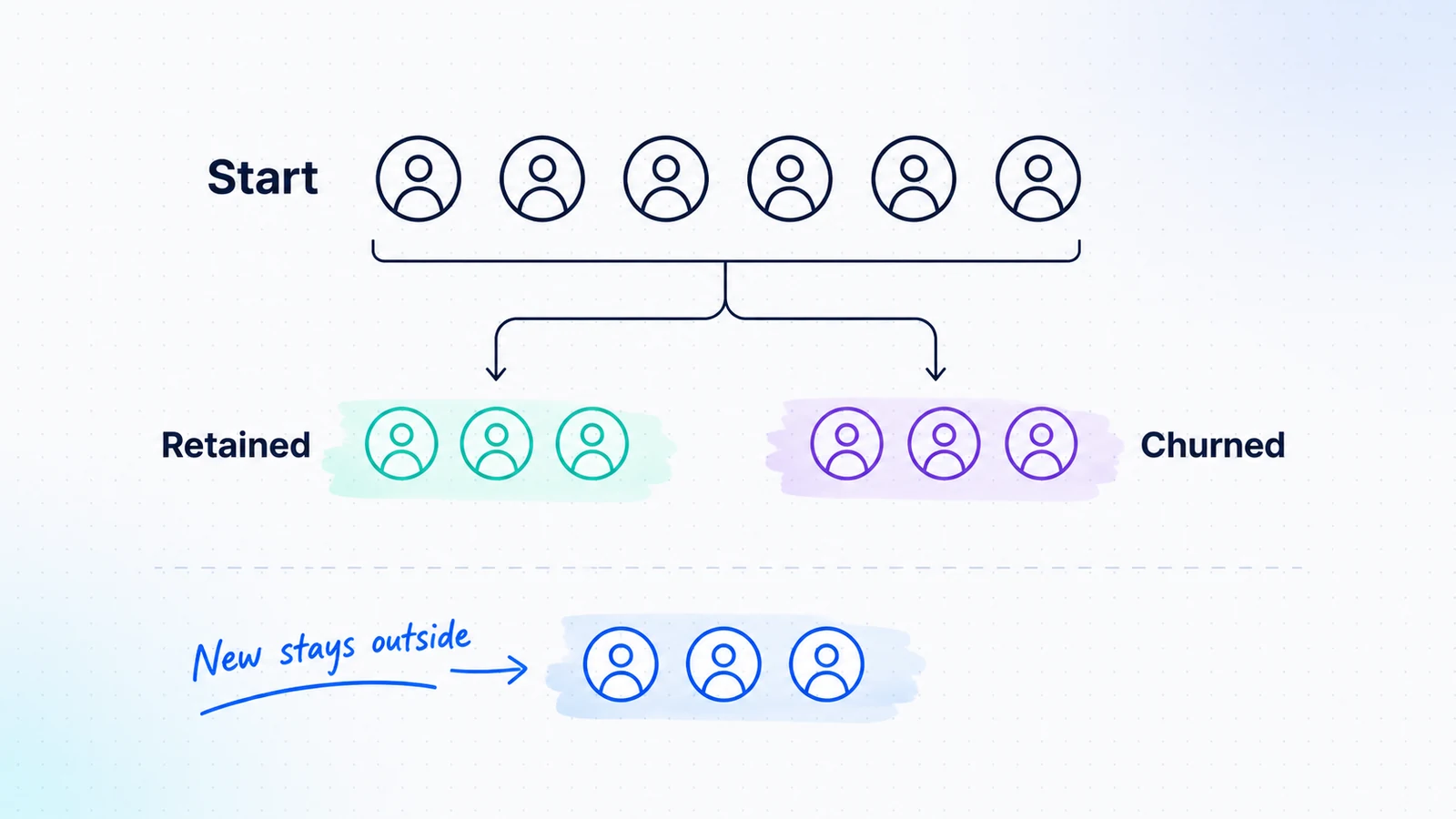
Choose a period and freeze the starting customer population. Then count how many of those accounts remain customers at the end:
Logo retention = Retained starting accounts / Starting accounts x 100
An equivalent calculation subtracts churned accounts from starting accounts before dividing by the starting count. New accounts acquired during the period do not enter the numerator or denominator.
The definition of an active customer must be consistent. Decide how to treat paused subscriptions, overdue invoices, mergers, free accounts, and customers with several subscriptions. If one company owns multiple subscriptions, account-level retention should still count that company once.
Choose the reporting window with the contract cycle in mind. Monthly retention can be useful for self-serve subscriptions, while annual contracts may reveal little until renewal dates arrive. A rolling 12-month view can make those renewal opportunities comparable, provided every period uses the same method.

SaaS example
A SaaS company starts the quarter with 120 paying customer accounts. During the quarter, 12 cancel. The other 108 remain active, so quarterly logo retention is 90%.
The company also adds 30 new customers. Those additions increase the total customer count, but they do not change retention for the starting cohort.
If the 12 cancelled accounts were all small while retained enterprise customers expanded, revenue churn may remain low. Looking at both metrics shows that the company protected revenue while still losing a meaningful share of its customer relationships.
Common mistakes
One mistake is adding new customers to the retention calculation. That turns retention into net customer growth.
Another is counting subscriptions instead of customer accounts. A customer with two plans should not become two logos unless the company explicitly defines the unit that way.
A third is comparing monthly logo retention with annual retention as if the percentages describe the same exposure window.
Teams also chase a single benchmark without accounting for customer type, contract length, or ICP. We believe the most useful comparison is internal: retention by cohort, segment, and time period under one stable definition. That shows whether the company is attracting and keeping the customer base it intended to serve.