


Customer health score
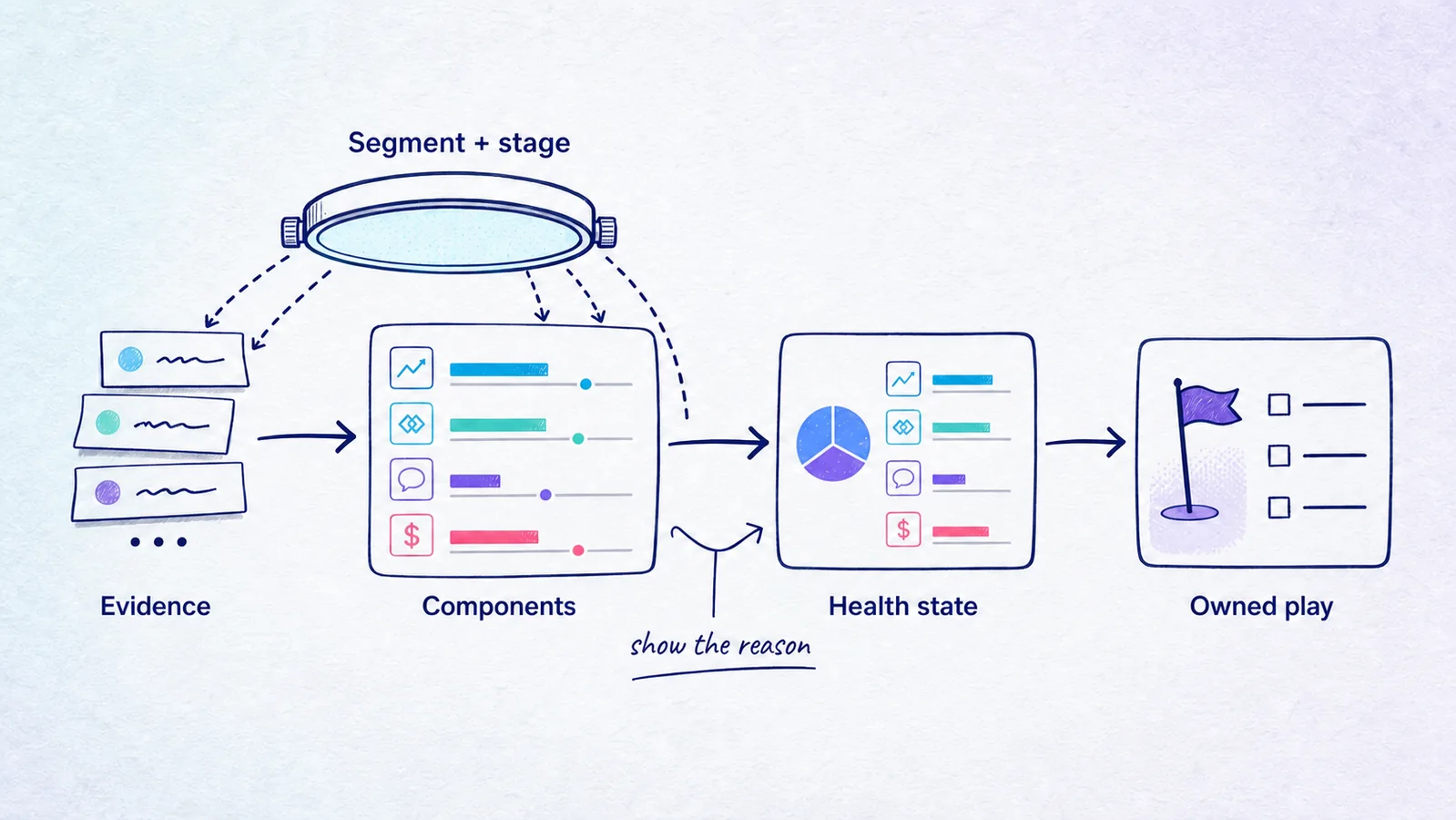
A customer health score is a segment-specific model that combines current evidence about customer outcomes, product behavior, relationship quality, support history, and commercial state. It helps a customer success team prioritize attention and select the next response.
The output may be a number, letter, or color. The format is secondary. A useful score shows which component changed, how fresh the evidence is, and which action follows. It does not diagnose an account or guarantee renewal.
Why customer health scores matter
Customer risk rarely arrives as one clean event. Product use may remain high while the executive sponsor leaves. Support volume may fall because users stopped trying. A low survey score may reflect one incident rather than a failing account.
A health model puts those signals in context. It can surface stalled customer onboarding, declining use of a core workflow, unresolved support severity, weak stakeholder coverage, or an approaching renewal without outcome evidence.
That prioritization can help teams address revenue churn, but the score is not a churn forecast by default. Its validity depends on the product, segment, lifecycle stage, data quality, and historical testing.
How a customer health score works
Start with the customer outcome and expected behavior for one segment. Then choose a small set of signals that represent progress, risk, relationship, and commercial context.
Common components include:
- Outcome progress: agreed milestones or use-case results.
- Product behavior: frequency, depth, breadth, and trend for relevant actions.
- Relationship: sponsor coverage, responsiveness, and stakeholder change.
- Support: severity, recurrence, resolution, and unresolved blockers.
- Commercial state: renewal timing, payment issues, contraction, or a confirmed larger need.
Apply weights only after you can explain why one component should matter more. Keep the components visible beside the final state. Add timestamps and expiry rules, especially for manually entered sentiment.
Use different models when expected behavior changes. An onboarding account may need setup completion and time-to-value signals. A mature enterprise account may need workflow depth, stakeholder coverage, outcome progress, and renewal readiness.

SaaS example
Consider a workflow product used by finance teams. During onboarding, healthy progress requires the data connection, permission setup, first completed close process, and an active administrator.
Six months later, setup events should no longer influence health. The account may instead be evaluated on repeated close completion, adoption across the licensed team, unresolved severity-one tickets, sponsor engagement, and outcome review.
If usage breadth falls while one administrator remains active, the score should expose that component. The response is adoption diagnosis, not an automatic renewal-risk message. The broader customer success strategy defines who accepts that play and how its result is reviewed.
Common mistakes
One mistake is copying generic weights from another SaaS company.
Another is allowing logins to dominate the model. Activity can continue without the customer receiving its intended result.
A third is hiding conflicting signals inside one color. The owner needs the components, not only the summary.
Finally, teams often trigger outreach without recording whether the signal was accurate or the response helped. That prevents validation.
The operator view
A health score should lose the right to exist if nobody can explain why it changed or which play follows. Its purpose is not to decorate a dashboard. Its purpose is to compress relevant evidence without erasing context.
The same rule applies in product-led sales: product behavior can prioritize attention, but it needs qualification before it becomes a customer or commercial action.