


Economic buyer
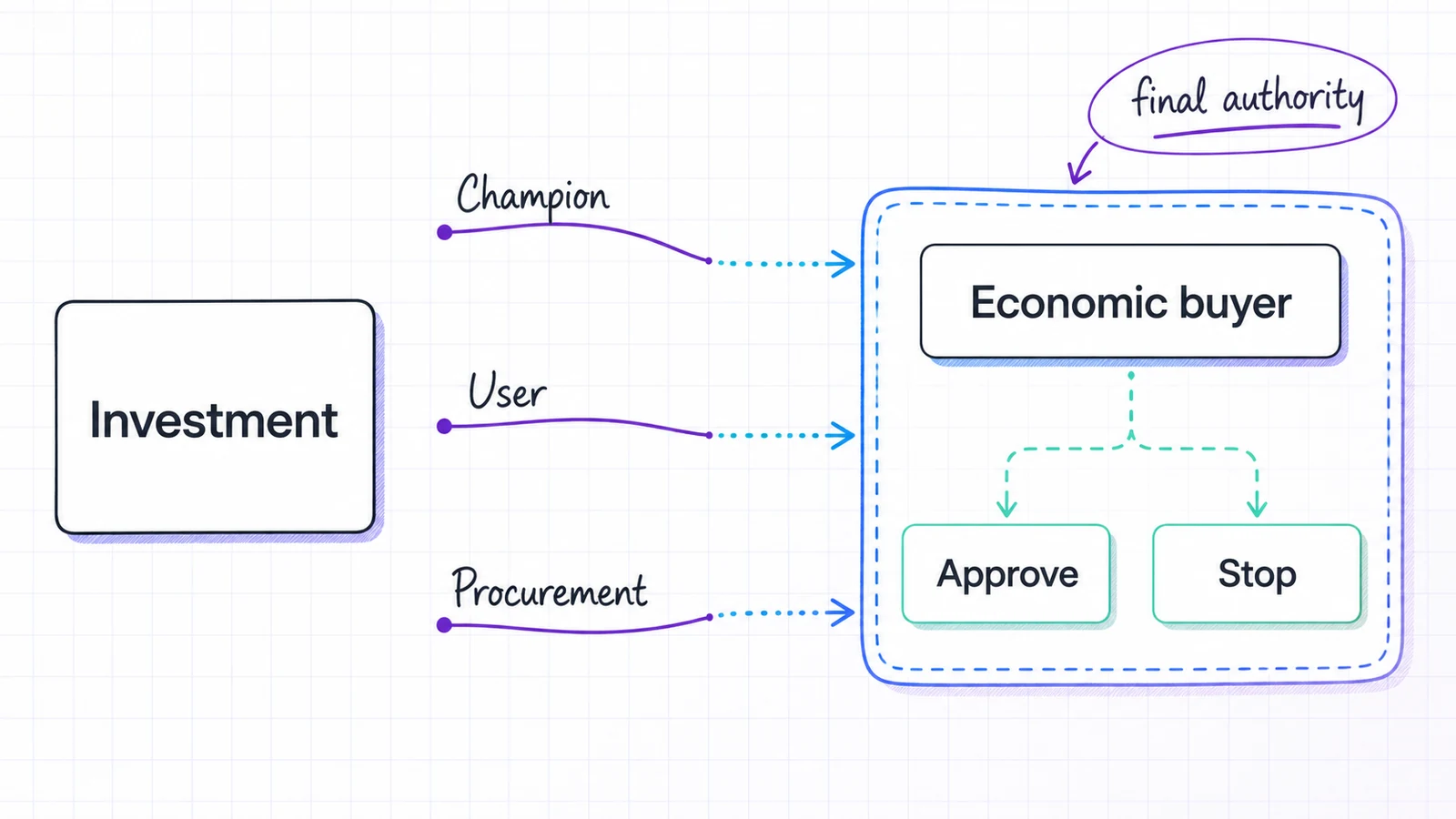
An economic buyer is the person with final authority over the investment for a specific purchase. They can approve the use of funds, reject the initiative despite support from other stakeholders, or authorize an exception when the original budget or policy is not enough.
The role is defined by decision power, not job title alone. A CFO may be the economic buyer for one purchase, while a business-unit leader holds that authority for another. Deal size, risk, and company structure can change where final approval sits.
Why the economic buyer matters
A complex buying committee can support a product without having the authority to fund it. Users may want the system. A champion may build the business case. Security may approve the risk. Procurement may negotiate the terms. The deal can still stop if the economic buyer does not see enough priority or value.
Finding this role changes the questions a seller needs to answer. Product features become less important than the investment case, expected outcome, timing, risk, and trade-off against other initiatives.
It also improves qualification. A seller who cannot identify the final approval path does not yet understand how the purchase will happen.
How to identify the economic buyer
Sales discovery should reveal authority through the buyer's process. Useful questions include:
- Who can approve this investment if it exceeds the current budget?
- Who can stop the initiative after the evaluation team recommends it?
- Which leader owns the business result this purchase is meant to improve?
- What other priorities compete for the same funds?
- Who approves an exception to standard purchasing policy?
The answers may identify several people. A budget holder can allocate funds within a limit but need executive approval above it. Procurement can control the purchasing steps without owning the business decision. A champion can influence the decision but may not have authority to make it.
The seller should prepare for the economic buyer with the champion, not treat access as a political shortcut. The conversation should connect the proposed investment to a current business priority, the cost of delay, the expected result, and the evidence supporting the case.

SaaS example
A RevOps director is evaluating a data-quality platform with an ACV above the department's normal approval limit. The director is the champion and owns the evaluation. Sales operations will use the product. Security approves data handling. Procurement handles pricing and contract steps.
The CRO is the economic buyer because the investment exceeds the director's authority and competes with other revenue initiatives. The CRO does not need another feature tour. They need to understand which revenue problem the platform addresses, why the timing matters, what adoption requires, and what happens if the company keeps the current process.
The mutual action plan should include that approval as a real milestone. Hiding it behind a generic "executive sign-off" task makes the deal look further along than it is.
Common mistakes
The first mistake is labeling the most senior contact as the economic buyer without testing their authority.
The second is confusing budget administration with final approval. A person may manage the budget while another leader controls exceptions or reallocations.
The third is approaching the economic buyer with the same presentation used for a product evaluator. The role needs a decision-ready investment case, not a longer demo.
How we see it
The clean test is decision power. Identify who can approve, who can veto, and who can move funds when the normal path is insufficient. Access matters, but authority is what defines the role.