


Speed to lead
Speed to lead is the elapsed time between a qualified inbound signal and the first meaningful response from a company. The clock might start when a buyer requests a demo, sends a product question, or replies positively to outreach. It stops when a response acknowledges the context or creates a clear next step.
A routing notification or generic confirmation email does not prove that the lead received a useful response. Those events can be measured, but they should not end the primary speed-to-lead clock.
Why speed to lead matters
Buyer intent decays. A person who submits a high-intent request may be comparing vendors, solving an urgent problem, or trying to make a decision while relevant stakeholders are available. A delayed reply gives that context time to disappear.
The metric also exposes a handoff problem between demand generation and inbound sales. Marketing may create the signal, but routing, ownership, and seller capacity determine when a useful reply reaches the buyer.
Speed alone is not the outcome. A fast, irrelevant message can waste the moment. The goal is a short delay followed by enough context to continue the conversation.
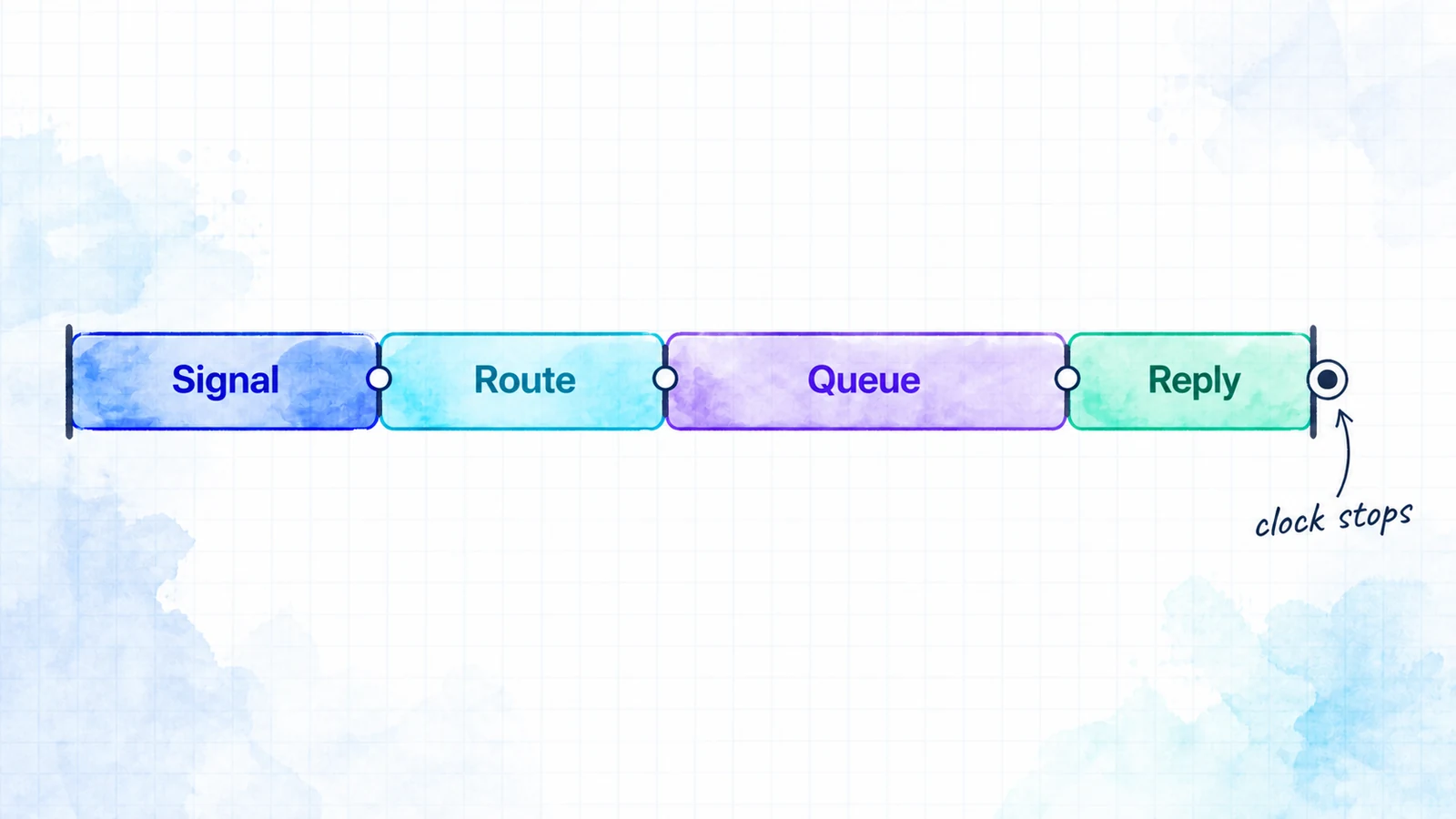
How speed to lead is measured
Define the start event first. Not every form fill deserves the same clock. A demo request, pricing inquiry, product-qualified hand raise, and content download carry different levels of intent. Lead scoring can help classify the signal before the response policy is applied.
Then define the stop event. A meaningful response may be a contextual email, a call attempt informed by the request, or a scheduling reply that answers the buyer's question. Write the rule clearly enough that two operators would classify the same event the same way.
The elapsed time usually contains four intervals: capture, routing, queue, and rep response. RevOps can timestamp each handoff so the team knows whether latency comes from data processing, assignment logic, staffing, or seller behavior.
Track the median and a slow-tail percentile by source and priority. An average can look acceptable while a smaller group of valuable leads waits for hours. Business-hours and after-hours policies should also be reported separately.

SaaS example
A security SaaS company receives a demo request from a target account at 10:02 a.m. The CRM creates the record at 10:03, routing assigns it at 10:05, and the rep sends a contextual response at 10:11.
The primary speed to lead is nine minutes, measured from submission to meaningful reply. Processing consumed three minutes and rep response consumed six. The instant confirmation email is recorded as an acknowledgement, not as the final response event.
If the buyer does not reply, the next attempts belong to the sales cadence. That sequence should not change the original response-time measurement.
Common mistakes
One mistake is starting the clock when a lead reaches the CRM instead of when the buyer acts. Integration delay then disappears from the metric.
Another is stopping the clock at assignment or an auto-receipt. Both make the dashboard faster without making the buyer experience faster.
A third is forcing one target across every lead source. Prioritize explicit buying signals, define coverage hours, and inspect quality alongside speed.
The useful question is not whether the team can send something quickly. It is whether the full system can recognize intent, route it correctly, and return a relevant response while the buyer's context is still active.