


Sales cadence
A sales cadence is the planned rhythm of outreach to a prospect across time and channels. It defines who enters the motion, which channels a seller uses, how touches are spaced, what each touch is meant to achieve, and what causes the outreach to stop, pause, or change direction.
Cadence and sequence are often used as synonyms. A useful distinction is that the cadence sets the rhythm and rules, while a sales sequence is one executable set of steps built from those rules. The email copy, call prompt, or LinkedIn message sits inside a sequence step.
Why a sales cadence matters
Without a cadence, prospecting depends on memory and individual preference. One rep sends several emails in a week. Another calls once and abandons the account. A third keeps following up after the buyer has clearly declined.
A shared cadence gives an SDR or BDR a repeatable baseline. It also gives a manager something concrete to inspect. If replies are weak, the team can separate list quality, channel choice, timing, message relevance, and follow-up discipline instead of treating prospecting as one problem.
That baseline should not remove discretion. It should tell the seller where discretion belongs.
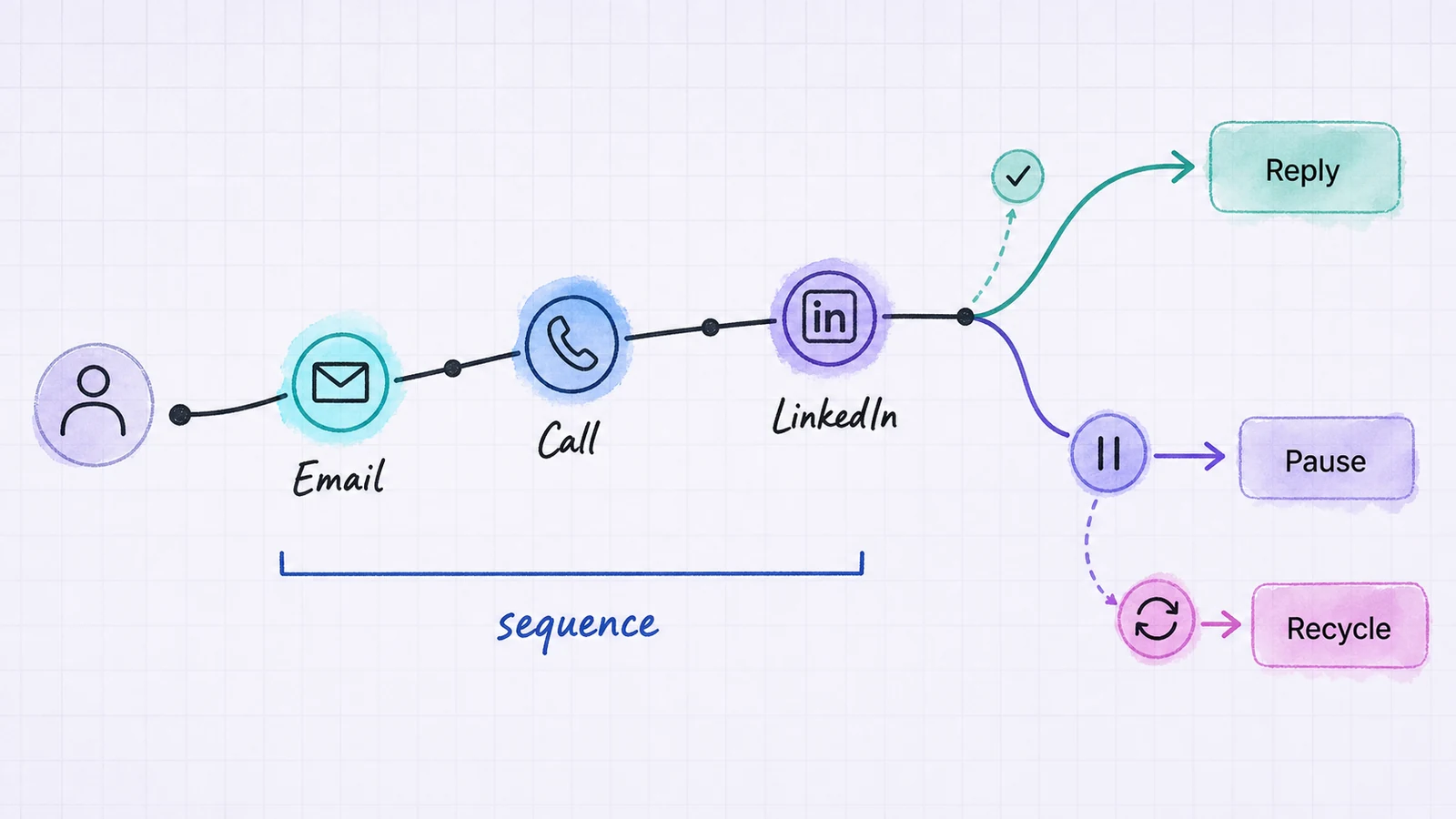
How a sales cadence works
A useful cadence starts with an entry rule. The prospect might match the ICP, show a relevant signal, request information, attend an event, or pass a lead scoring threshold.
The cadence then defines several components:
- Channel mix, such as email, phone, LinkedIn, or a short video
- Timing and spacing between touches
- The purpose of each touch
- Personalization requirements
- Response rules for replies, referrals, opt-outs, and invalid data
- Exit, pause, and recycle conditions
The order should match the context. An inbound request may need a fast direct response. A cold account may need research before the first message. A senior executive may warrant fewer, more specific touches than a broad contact list.
The cadence ends when the buyer replies, opts out, becomes disqualified, enters a conversation, or reaches the defined no-response exit. Continuing automated outreach after one of those events is a process failure.

SaaS example
Imagine a SaaS company targeting RevOps leaders after a funding event. The cadence begins only when the account fits the target segment and the funding signal is current.
The first touch is a concise email connecting the funding event to a likely data or pipeline change. A call follows while the context is still timely. A later LinkedIn touch uses a different angle rather than repeating the email. If the buyer replies, the sequence stops and the rep handles the conversation. If there is no response, the account leaves active outbound sales and returns to a later recycle pool.
The cadence gives the rep a route. The account signal and buyer response still determine the next action.
Common mistakes
The first mistake is treating more touches as better coverage. Repetition without a new reason creates noise.
The second is using one cadence for every segment, role, and signal. Different buying contexts need different timing and proof.
The third is measuring only activity. Send volume cannot show whether the list was right, the message created interest, or the resulting meetings became qualified pipeline.
How we see it
A cadence should make outreach deliberate. Its value comes from controlled variation and clear stop rules, not from turning every prospect into a queue of automated tasks.