


BDR
BDR means business development representative. A BDR identifies target accounts, researches buying context, starts conversations, qualifies interest, and creates pipeline for an account executive or another closing role.
Many companies use BDR and SDR interchangeably. Others separate them: BDRs focus on outbound or strategic accounts, while SDRs handle inbound leads or a broader prospecting motion. The title matters less than the ownership, qualification standard, and handoff.
In B2B SaaS, the role usually sits near the beginning of the sales process and is measured by qualified meetings, opportunities, pipeline value, conversion, and account quality.
Why it matters
A BDR motion gives a company a deliberate way to reach accounts before those buyers request a demo. It can help a startup test a new ICP, enter a segment, reach senior buyers, or create demand around a problem that is not yet an active search category.
Good BDR work also produces market feedback. Replies, objections, referrals, timing signals, and disqualifications reveal whether the account selection and message fit the market.
That feedback becomes more useful when the BDR records why an account engaged, why it declined, and which assumption should change in the next account list.
The role becomes expensive when the team optimizes for meetings without checking whether those meetings become qualified pipeline.
How it works
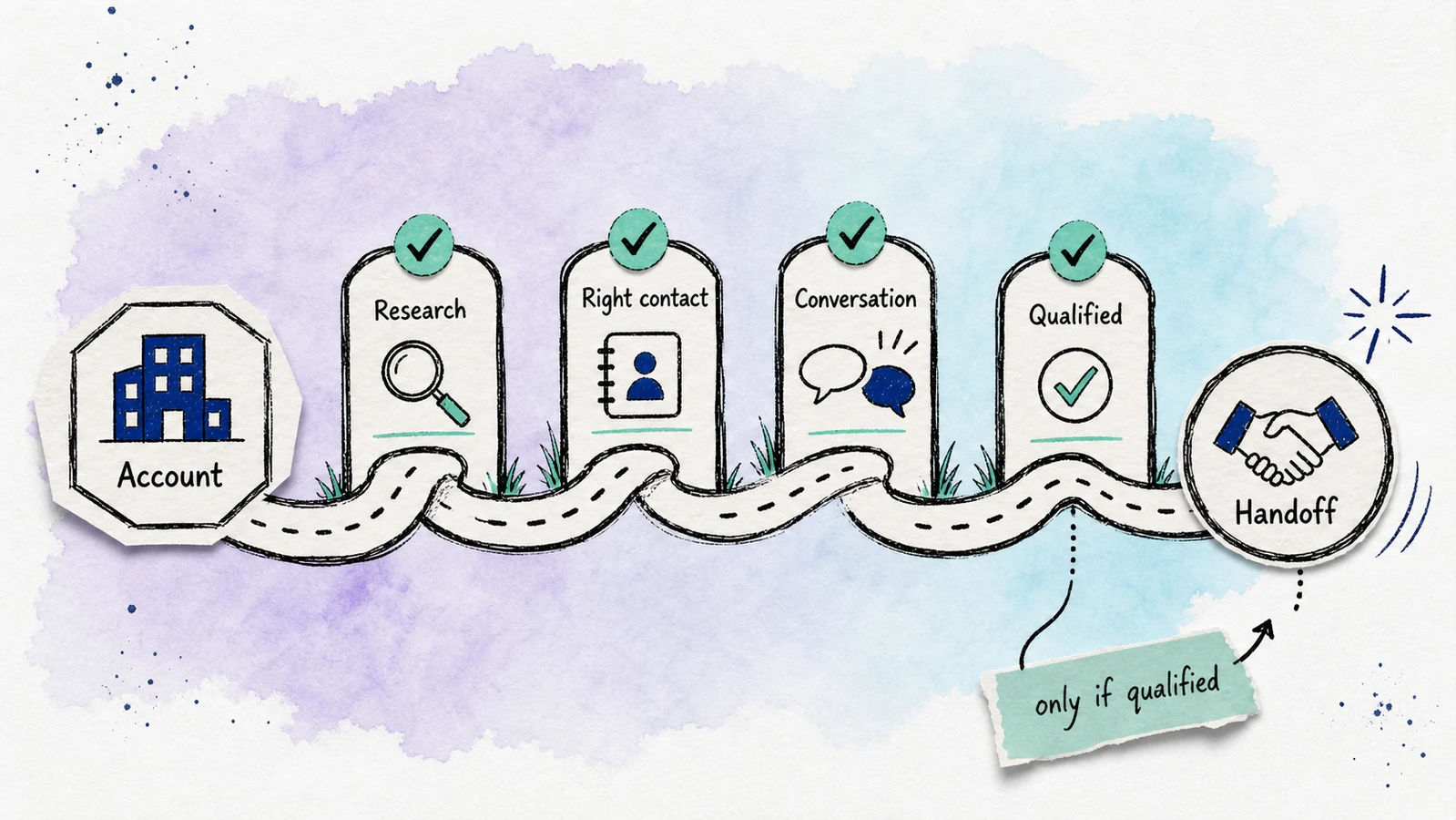
A BDR workflow usually has six steps.

First, account selection. The team chooses companies based on fit, pain, timing, and strategic value.
Second, research. The BDR looks for useful context such as hiring, funding, product changes, technology, expansion, leadership moves, or operational pressure.
Third, contact selection. The BDR identifies the role most likely to feel, own, or approve the problem.
Fourth, outreach. The message connects a relevant observation to a credible reason for a conversation.
Fifth, qualification. The BDR confirms enough fit, pain, timing, and ownership to justify sales time.
Sixth, handoff. The BDR passes clean context and a defined next step into the sales pipeline.
SaaS example
Imagine a BDR selling workflow automation to RevOps teams. The BDR may prioritize companies hiring sales operations roles, adding outbound headcount, or showing CRM data problems.
The outreach should explain why that signal may create operational pain. If the account responds, the BDR qualifies the workflow, ownership, urgency, and buying path before handing the conversation to an AE.
That is a focused outbound sales motion, not a volume contest.
Common mistakes
The first mistake is giving BDRs a list with no market logic.
The second mistake is treating every reply or booked call as equal.
The third mistake is automating research so heavily that the message loses a real reason to exist.
How we see it
A BDR should create useful sales conversations, not calendar occupancy. The role works when account selection, signal quality, message, qualification, and AE follow-through reinforce each other.