


Outbound sales
Outbound sales is a proactive sales motion where a company selects target accounts, identifies relevant buyers, initiates contact, qualifies interest, and creates opportunities. The seller starts the conversation instead of waiting for the buyer to submit a form or request a demo.
Common outbound channels include email, phone, LinkedIn, direct mail, events, partner introductions, and targeted account campaigns.
In B2B SaaS, outbound is often used to reach a specific ICP, enter a new segment, sell higher-value products, or create demand before the category has strong search volume.
Why it matters
Outbound gives a company control over who enters the sales motion. Marketing demand can be uneven or broad. Outbound can focus on accounts with the right size, pain, technology, hiring pattern, or buying trigger.
It also creates fast market feedback. A well-defined campaign can show whether the account list, timing, message, offer, and persona produce qualified conversations.
The tradeoff is cost and attention. Weak outbound can damage trust quickly because the company is interrupting someone who did not ask to hear from it.
That makes list quality and suppression important at scale. Existing customers, active opportunities, recent declines, and clearly irrelevant accounts should not keep re-entering automated campaigns.
How it works
A useful outbound motion has six connected parts.
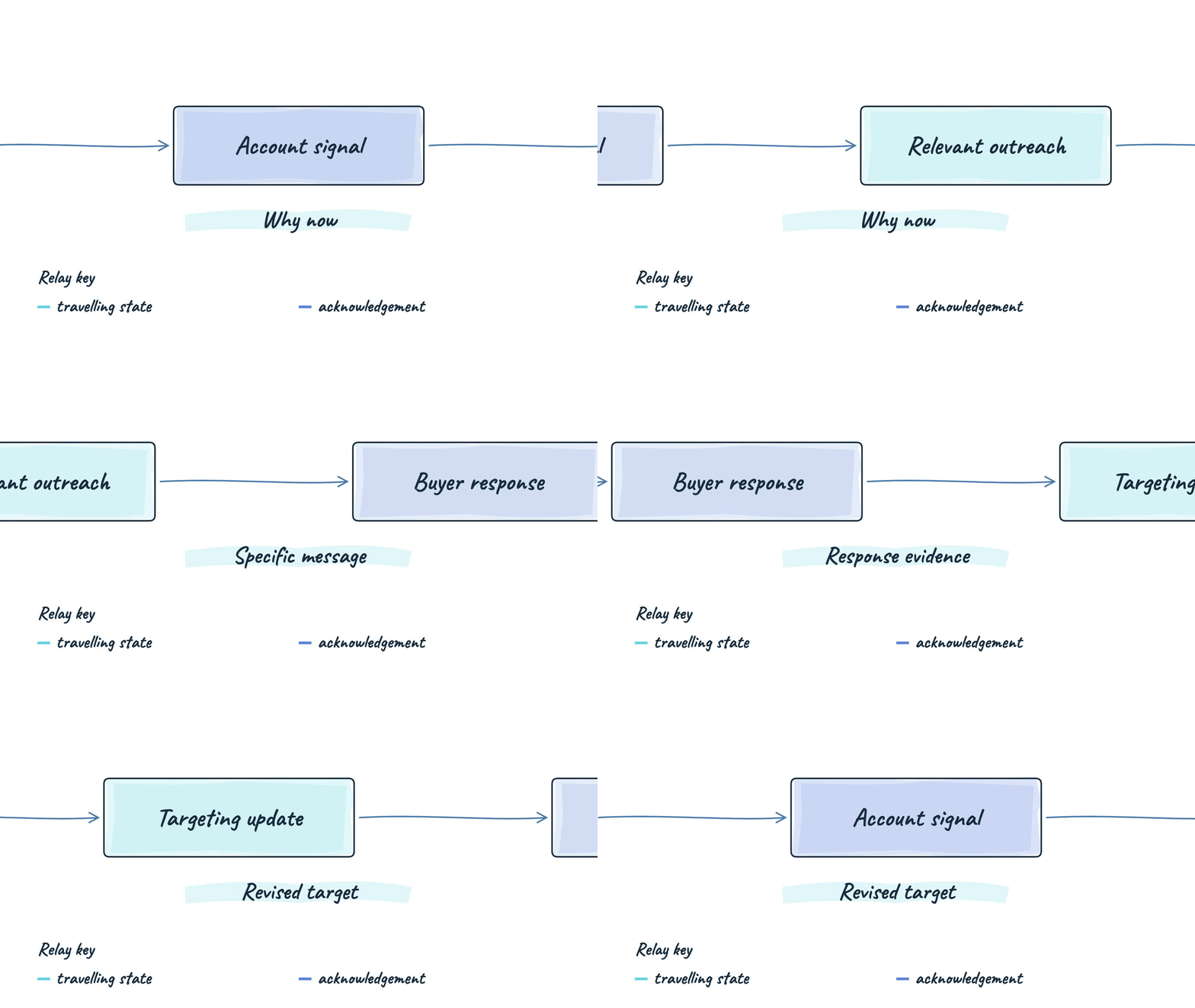
First, targeting. The team defines which accounts deserve attention and why.
Second, timing. It looks for triggers or conditions that make the problem relevant now.
Third, buyer selection. The team finds the person who feels, owns, influences, or approves the problem.
Fourth, outreach. The message earns attention with a specific reason, clear relevance, and a sensible next step.
Fifth, qualification and handoff. A BDR or SDR confirms fit and passes useful context to the account executive.
Sixth, feedback. The team uses replies, objections, meetings, disqualifications, and sales pipeline outcomes to improve the next campaign.
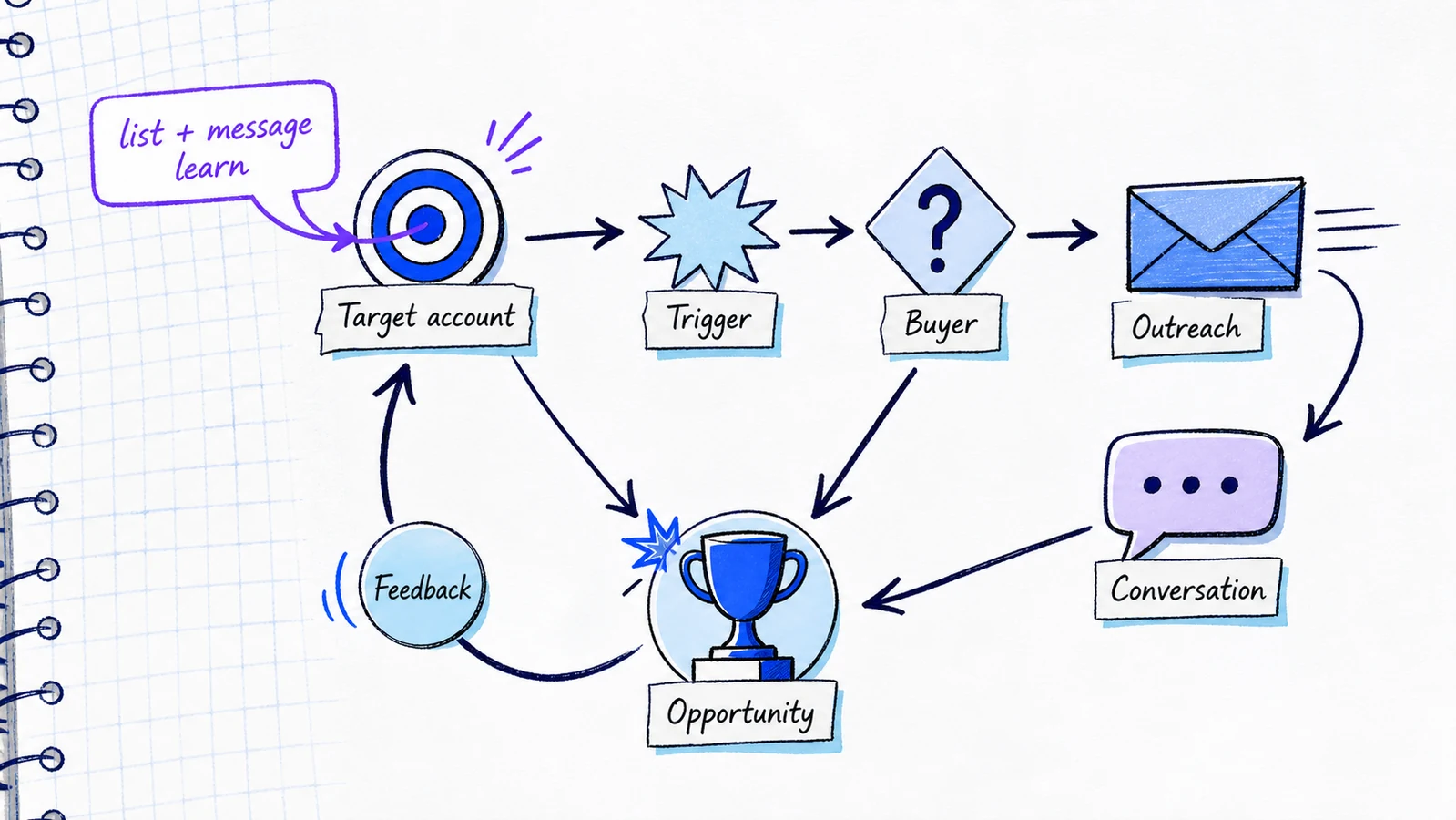
That feedback belongs in the next account list.
SaaS example
Imagine a SaaS product that improves onboarding analytics. The company could target product-led businesses that recently hired a growth leader and have visible activation pressure.
The message should connect that condition to a meaningful question, such as whether the team can see where new users fail before activation. The strongest signal is useful because it changes the timing and substance of the outreach.
Common mistakes
The first mistake is treating a large database as a market.
The second mistake is using shallow personalization with no business relevance.
The third mistake is measuring replies or meetings without checking opportunity quality.
The fourth mistake is scaling a campaign before the team understands why the first conversations worked.
How we see it
Outbound sales should be selective enough to teach the company something. More sends cannot compensate for weak targeting, poor timing, or a message that has no credible reason to interrupt the buyer.