


Product marketing
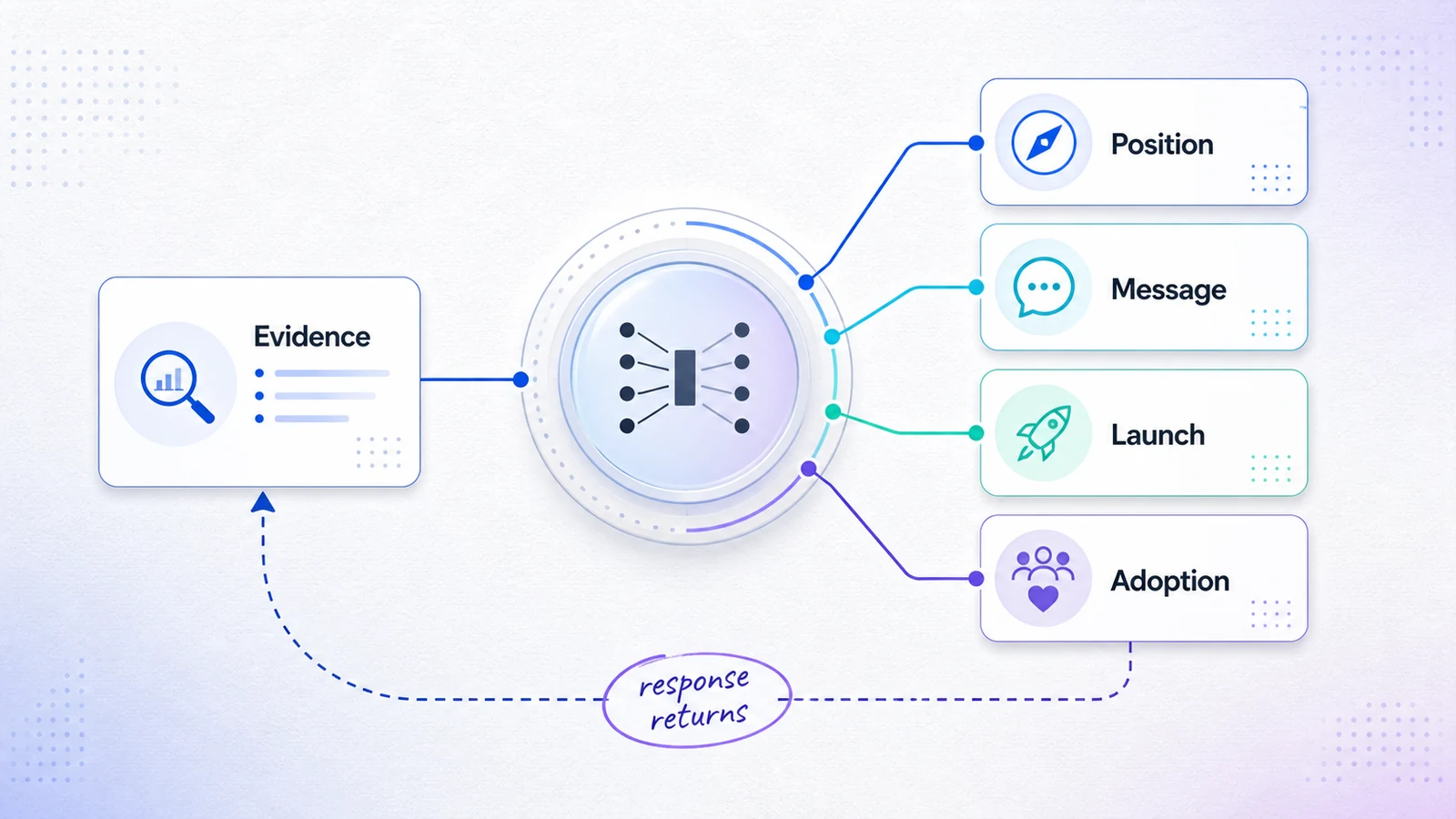
Product marketing is the function that turns market and customer evidence into the positioning, messaging, launch choices, sales context, and adoption programs behind a product's market success. It connects what buyers need with how the company presents, sells, and supports the product.
The function starts before launch and continues after it. A launch is one event inside a larger cycle of research, market decisions, execution, and feedback.
Why product marketing matters
A product can be useful and still be difficult to understand or buy. Buyers may not recognize the problem, see how the product differs from an alternative, or know which use case should lead.
Product marketing reduces that ambiguity. Customer interviews, win-loss evidence, usage patterns, sales conversations, and competitor changes inform the positioning, value proposition, and messages used across the market.
It also helps teams make consistent decisions. Product can see which problems carry urgency. Marketing can use a clear audience and narrative. Sales can use evidence and objection context. Customer teams can reinforce the use cases that support adoption.
How product marketing works
The cycle begins with market evidence. Product marketers study the audience, alternatives, buying process, product usage, and customer language. A buyer persona can organize some of that evidence, but the underlying interviews and behavior matter more than the document.
The evidence shapes segmentation, positioning, messaging, and proof. Those decisions then inform launches, website copy, sales enablement, demos, onboarding, customer education, and competitive responses.
After release, the team inspects market response. Are buyers understanding the product? Which claims create qualified interest? Where do deals stall? Which use cases activate and retain customers? The answers should alter the next product marketing decision.
Product management usually owns what gets built and how it is delivered. Product marketing usually owns market readiness, interpretation, and adoption. In a small startup, one person may cover both sets of responsibilities, but the decisions remain different.

SaaS example
Imagine a SaaS company adding automated account research. Product management defines the capability, requirements, and release plan.
Product marketing identifies the best initial audience, the existing alternative, the leading problem, and the proof required to support the claim. It updates the product's GTM, prepares sales to explain when the feature fits, and gives existing customers a relevant adoption path.
After launch, the team compares message response, sales objections, activation, and repeated usage. If buyers understand the promise but users fail to adopt the feature, the next decision may involve onboarding or product feedback rather than more demand generation.
Common mistakes
One mistake is reducing product marketing to launch coordination. That leaves research, positioning, enablement, and adoption without a clear owner.
Another is producing collateral before choosing the audience and market position. More assets cannot repair an unclear premise.
A third is measuring output through documents created. Product marketing should improve market decisions and make buyer response easier to interpret.
The clearest test is observable: teams should make more consistent choices, buyers should understand the product faster, and customer response should inform what happens next.