


Buyer persona
A buyer persona is a practical profile of the person involved in evaluating, buying, using, or approving a product. In B2B SaaS, it describes the role, goals, pressures, pain, triggers, objections, language, and decision influence of a buyer inside a target account.
A buyer persona is different from an ICP. The ICP describes which companies are a strong fit. The persona describes the people inside those companies and how each person experiences the problem and the purchase.
One account can contain several personas: a user, champion, economic buyer, technical reviewer, procurement owner, and executive sponsor.
Why it matters
Companies do not buy software as one unified mind. Different people care about different risks. A user may want less manual work. A manager may want consistency. Finance may care about cost. Security may care about data handling. Leadership may want faster growth or lower risk.
Buyer personas help positioning, content, outbound, discovery, demos, and sales enablement reflect those differences. They also stop teams from writing every message to a vague "decision-maker."
For early SaaS teams, persona work can expose a common sales problem: the person who feels the pain may not control the budget, while the budget owner may not understand the workflow deeply.
How it works
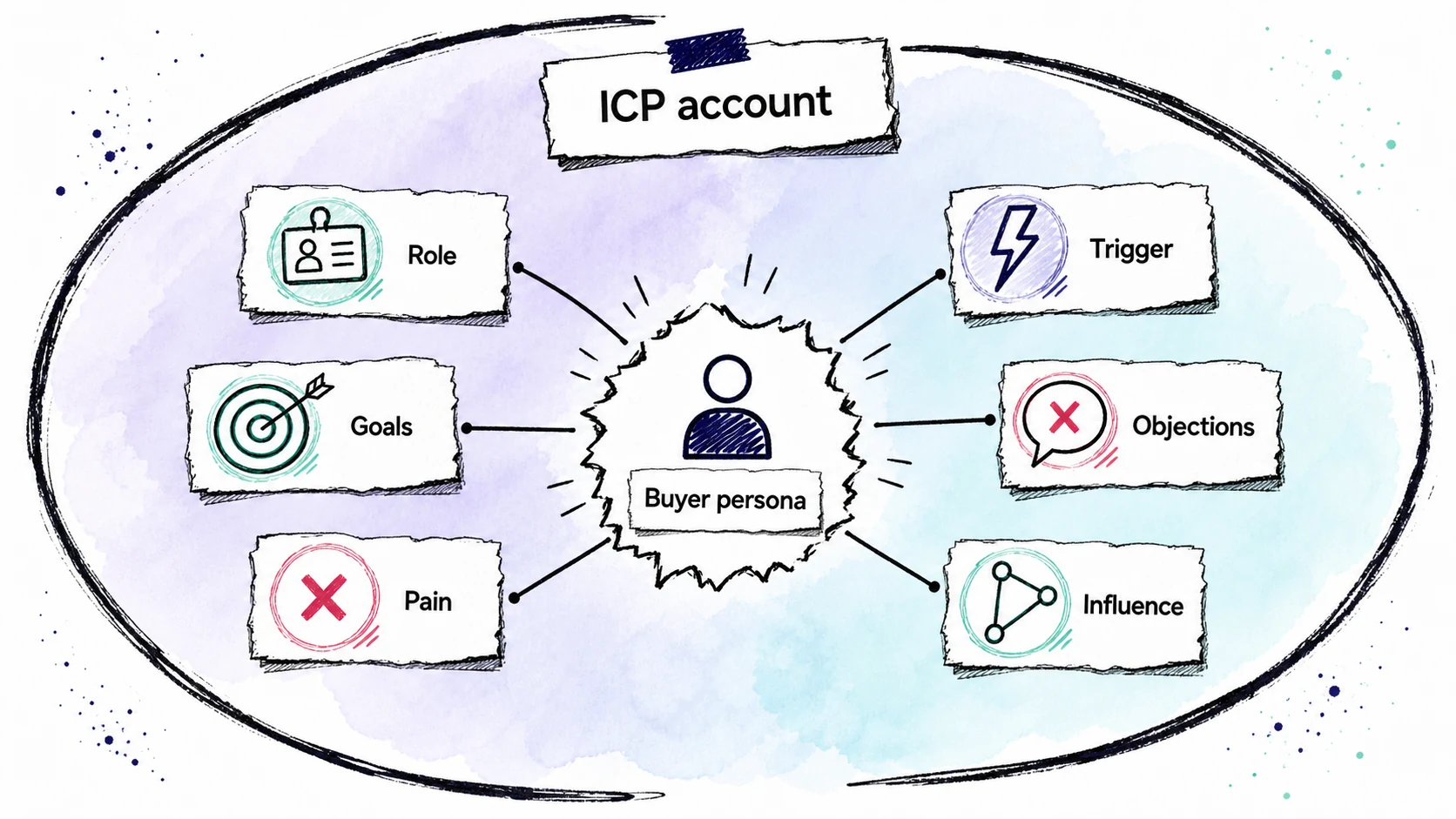
A useful buyer persona answers six questions.

First, role: what does this person own, and how are they measured?
Second, goals: what outcome are they trying to create?
Third, pain: what makes their work slower, riskier, more expensive, or less predictable?
Fourth, trigger: what change makes the problem urgent now?
Fifth, objections: what could stop them from supporting the purchase?
Sixth, influence: are they a user, champion, blocker, approver, or budget owner?
Personas should come from real sales calls, interviews, win-loss notes, support conversations, and usage patterns. Job titles alone are weak evidence because the same title can own different work across companies.
SaaS example
Imagine a SaaS company selling enrichment workflows. The RevOps persona may care about CRM quality and governance. The SDR persona may care about faster account research. The sales leader may care about qualified pipeline and rep productivity.
The product is the same, but the message and proof change by persona. An account executive can use that distinction to involve the right stakeholders during a deal.
Common mistakes
The first mistake is writing fictional biographies. Age, hobbies, and invented quotes rarely improve a B2B sales motion.
The second mistake is creating too many personas. Start with the roles that feel the pain, control the decision, or can block it.
The third mistake is treating persona documents as permanent. Roles, priorities, and buying pressure change as the market and product change.
How we see it
A buyer persona should improve a real decision. If it does not change the message, channel, discovery question, proof, or stakeholder plan inside the go-to-market strategy, it is probably decorative research.