


Value proposition
A value proposition is a clear explanation of who a product is for, which problem it solves, what outcome it creates, why it is different from the alternatives, and why the buyer should believe the claim.
In B2B SaaS, the value proposition gives a buyer a reason to spend attention, budget, and political capital on change. It should connect the product to a business result without making the buyer translate a list of features.
A value proposition supports positioning, but the two are not identical. Positioning defines the product's place in the market and against alternatives. The value proposition expresses the specific value a buyer can expect.
Why it matters
Buyers see many products that sound similar. If the value proposition is vague, the product becomes another tool claiming speed, efficiency, or growth. Sales then has to rebuild the meaning on every call.
A strong value proposition helps the website, outbound, content, demo, and sales conversation lead with the same promise. It also forces the team to choose which ICP and buyer persona matter most.
The value proposition is useful internally too. Product teams can compare roadmap requests against the outcome the company intends to own. Revenue teams can test whether the promise creates qualified interest and survives buyer scrutiny.
How it works
A useful value proposition contains five parts.

First, customer: the specific account or role the promise is built for.
Second, problem: the costly or frustrating condition the buyer wants to change.
Third, outcome: the result the buyer receives, stated in language they use.
Fourth, difference: why this approach is a better fit than competitors, internal work, spreadsheets, hiring, or doing nothing.
Fifth, proof: evidence that makes the outcome credible, such as product behavior, customer results, technical capability, or a clear mechanism.
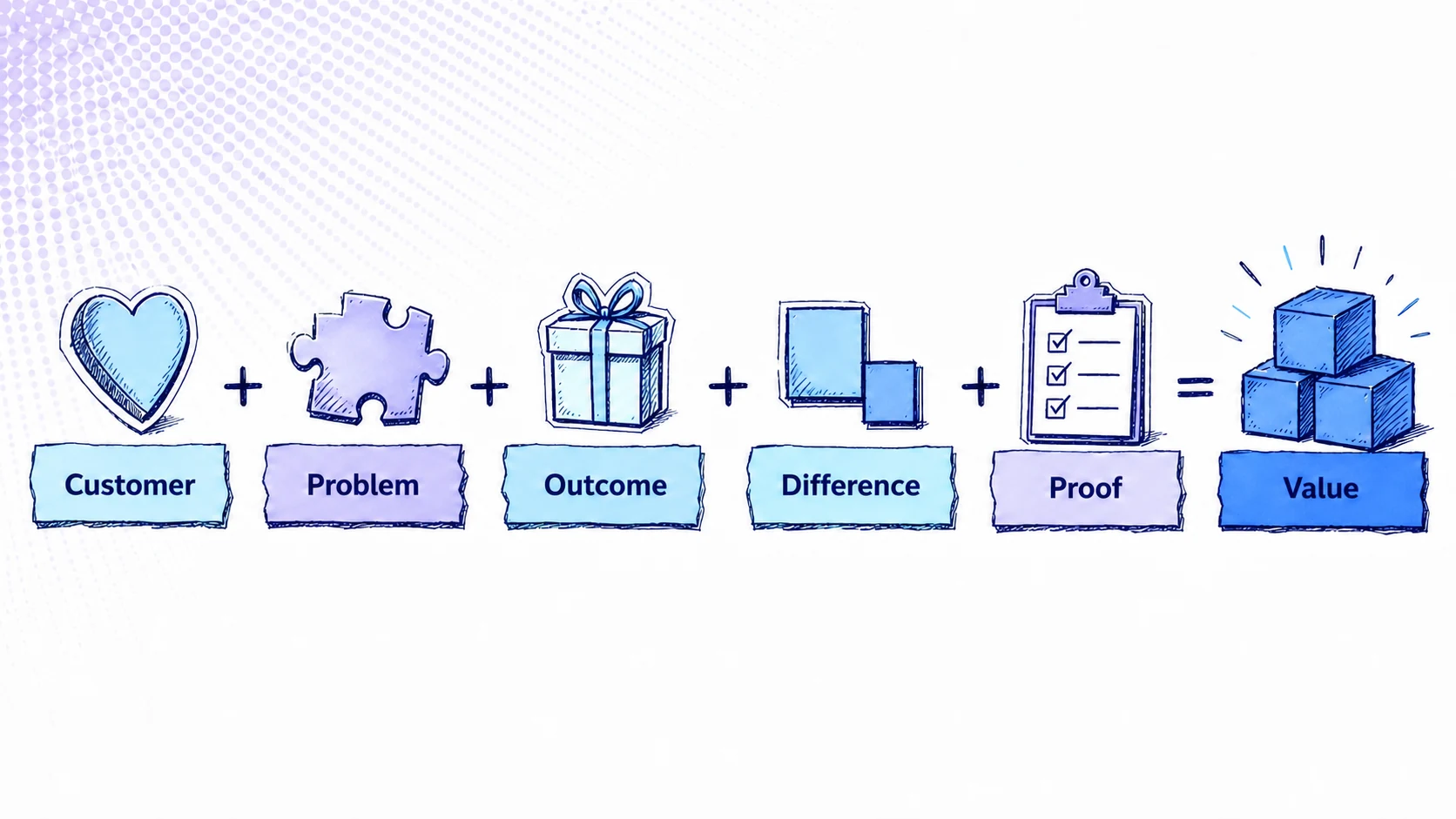
The statement does not need to contain every part in one sentence. The page or sales conversation can carry the full logic as long as the buyer can understand it quickly.
SaaS example
Consider a SaaS product that automates account research. "AI sales intelligence" describes a category. A sharper value proposition might promise that lean outbound teams can identify high-fit accounts and prepare relevant research without adding hours of manual work.
An outbound sales message may lead with the pain and timing. An account executive may expand the proof, cost, and business case during a deal.
Common mistakes
The first mistake is using broad benefits that any competitor could claim.
The second mistake is leading with technology. Buyers care about the mechanism after they understand the result.
The third mistake is promising an outcome without proof or a believable path to it.
How we see it
A value proposition should help the right buyer recognize value and help the wrong buyer move on. Specificity may reduce raw attention, but it improves the quality of the attention that remains.