


Mutual action plan
A mutual action plan, often shortened to MAP, is a shared plan that helps a buyer and seller complete a complex purchase. It records the outcome they are trying to reach, the milestones along the way, who owns each action, the target dates, and any dependencies that could delay the decision or implementation.
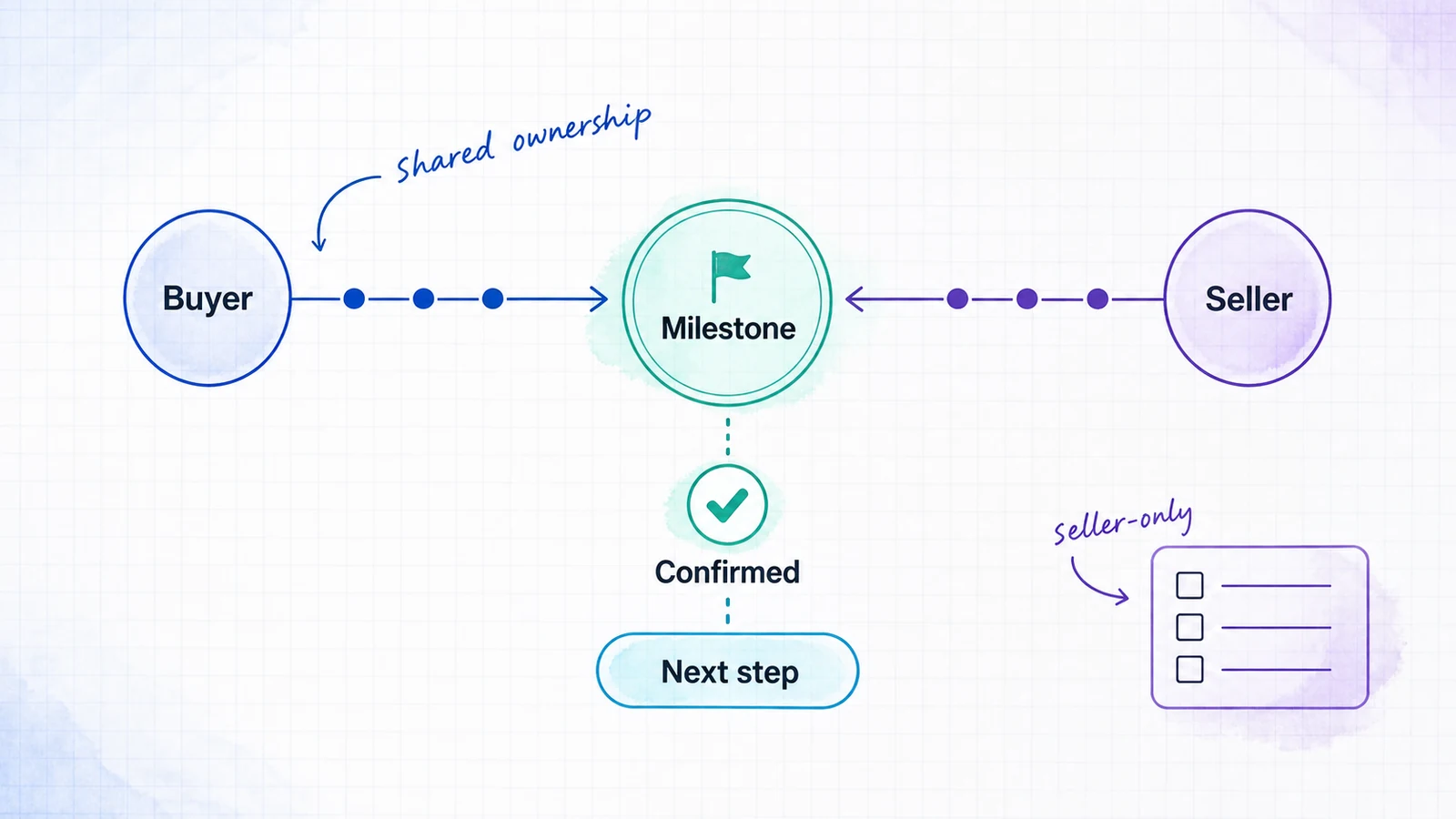
The word "mutual" sets the boundary. A seller's private checklist is not a MAP. The buyer needs to shape the plan, accept ownership, and confirm when priorities or dates change.
Why a mutual action plan matters
A B2B purchase rarely depends on one person. Security, finance, legal, procurement, and executive approval may each have a role in the buying committee. Those steps often remain invisible until late in the deal.
A MAP makes the buying process inspectable. It gives both sides a common view of the next milestone, unresolved dependency, and current owner. That makes it useful for deal coordination, but also for qualification. If the buyer will not validate the plan, the opportunity may not have the urgency or internal support the seller assumed.
How a mutual action plan works
The seller usually introduces a draft after sales discovery has established the problem, desired outcome, and likely buying process. The buyer then corrects the draft. A useful MAP normally includes:
- The business outcome or target go-live date
- Milestones such as technical validation, security review, commercial approval, and contracting
- One named owner for each action
- Target dates and dependencies
- A visible status for completed, blocked, and changed actions
The plan should be updated during buyer conversations, not filed away after creation. Each completed milestone should reveal the next commitment. Each missed date should trigger a discussion about the cause and whether the overall timeline still holds.
This also improves the quality of the sales pipeline. A deal with buyer-confirmed actions is different from a deal whose close date exists only in the CRM.

SaaS example
Consider a SaaS company selling data infrastructure to a mid-market customer. The buyer wants the system live before annual planning. The MAP starts from that date and maps backward through a data test, architecture approval, security review, legal redlines, procurement, and implementation preparation.
The buyer's security lead owns the questionnaire. The seller's solutions engineer owns the architecture response. Procurement owns vendor setup. When security review slips, the plan shows which later milestone is now at risk.
The MAP does not guarantee the purchase. It gives both teams an honest view of the path and protects sales velocity from being measured against an invented timeline.
Common mistakes
The most common mistake is creating the plan without the buyer. That produces seller activity, not shared commitment.
Another mistake is filling the plan with vague actions such as "legal review" without an owner, completion condition, or date. The final mistake is treating every missed milestone as an administrative delay. A missed action can signal a priority change, internal disagreement, or weak sponsorship.
How we see it
A MAP is useful when it exposes commitment, not when it creates the appearance of control. The document earns trust only when both sides can change it, own actions inside it, and use it to surface a deal that is no longer moving.