


Multithreading in sales
Multithreading in sales means building relevant relationships with several stakeholders inside the same opportunity. The goal is to understand and support the buying process across the people who influence the problem, evaluate the product, approve the investment, manage risk, use the system, or own implementation.
It is not a tactic for contacting as many employees as possible. Each thread needs a clear reason tied to the deal. Five contacts from one department can still leave the seller dependent on a narrow view of the decision.
Why multithreading matters
Complex purchases are made by a buying committee, even when one person appears to lead the evaluation. A champion may understand the problem but lack budget authority. A technical evaluator may approve the architecture but not the commercial case. Procurement may enter late with requirements no earlier contact mentioned.
A single-threaded opportunity hides those dependencies. If the main contact changes roles, loses influence, or stops responding, the seller loses both access and context.
Multithreading gives the account executive a more accurate picture of how the decision will happen. It also gives the buying team direct access to the seller-side specialist who can answer each concern.
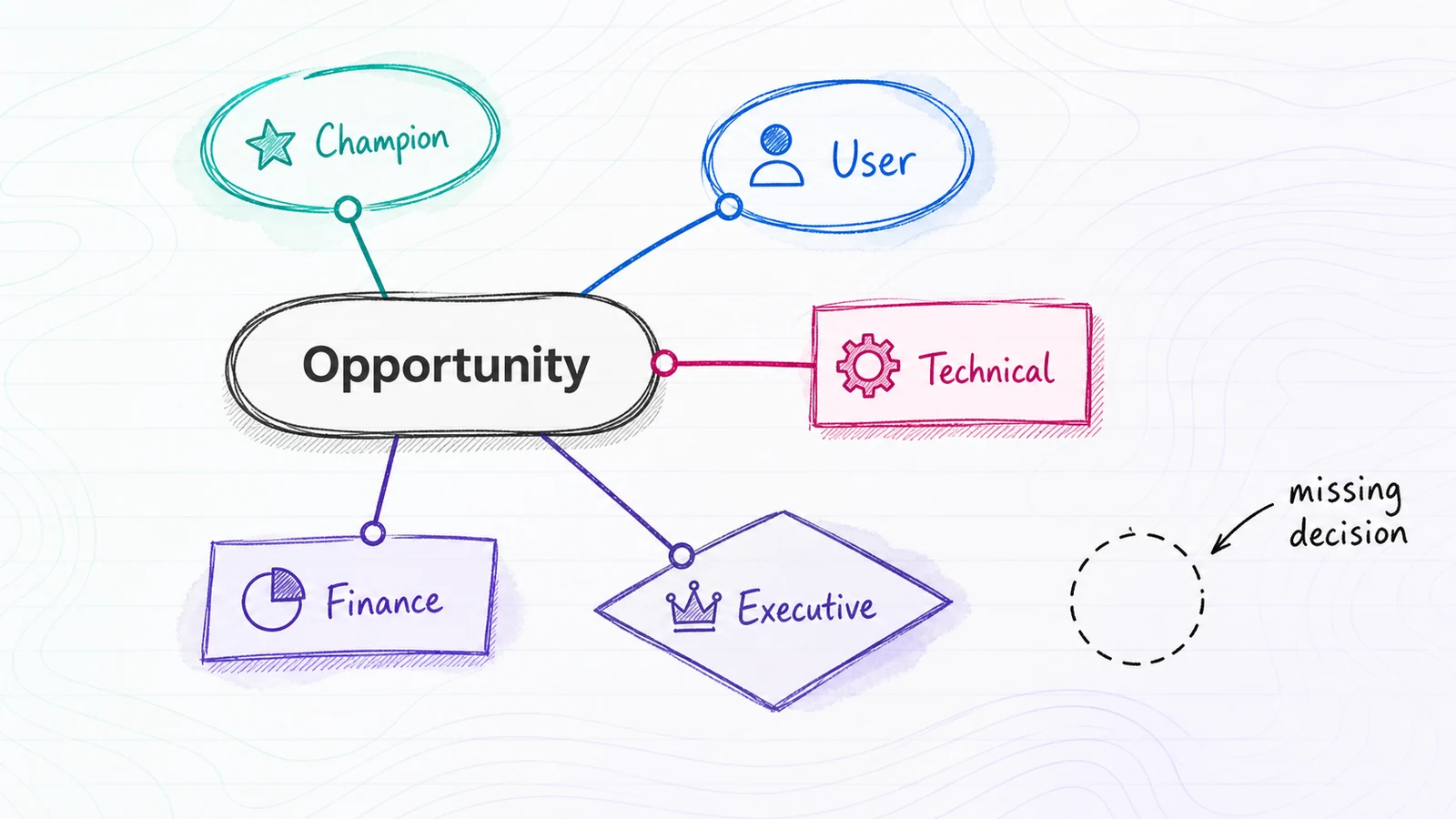
How multithreading works
Start with a stakeholder map, not a contact list. Identify the roles involved in five areas:
- Problem ownership
- Daily use
- Technical or security evaluation
- Financial approval
- Executive priority
Then record what each person cares about, what evidence they need, how much influence they hold, and who can introduce the next relevant stakeholder. Sales discovery should reveal this structure over time.
The strongest new thread usually begins with context. Instead of sending a cold message to the CFO, the seller can ask the champion how the investment will be reviewed and whether a short financial summary would help. The champion can shape the introduction and preserve trust.
Multithreading also applies to the selling team. A solutions engineer can meet the buyer's technical evaluator. A security lead can answer risk questions. An executive sponsor can address strategic priority. The seller should match expertise to the buyer's decision, not add senior people as decoration.

SaaS example
A company is evaluating a customer-data platform. The initial contact is a marketing operations leader who wants cleaner lifecycle reporting.
The seller maps the broader decision. Data engineering needs to validate ingestion. Security needs to review data handling. Finance wants the commercial case. The VP of Marketing decides whether the project is important enough to fund this quarter.
Each conversation contributes different evidence. The technical thread confirms feasibility. The user thread defines adoption requirements. The finance thread tests the economic case. The executive thread connects the purchase to a current priority.
The seller does not use one generic buyer persona message across all four. Each thread receives the context and proof relevant to its role.
Common mistakes
The first mistake is measuring multithreading by contact count. Coverage depends on roles and decisions, not the number of names in the CRM.
The second is bypassing the champion. Surprise outreach can damage the relationship that provided access in the first place.
The third is repeating the same pitch to every stakeholder. A user, security reviewer, and financial approver do not need the same conversation.
How we see it
Multithreading should reveal the buying system around a deal. A useful stakeholder map shows who owns each decision, what evidence is missing, and where the opportunity still depends on one person's interpretation.