


Lifecycle marketing
Lifecycle marketing is the practice of changing messages, offers, education, and calls to action according to a person's or account's current stage and behavior. It can span acquisition, activation, conversion, retention, expansion, re-engagement, and advocacy.
The discipline is broader than an email sequence. It coordinates the next useful action across channels as the relationship changes.
Why lifecycle marketing matters
A new visitor, an activated user, a customer approaching renewal, and an inactive account do not need the same message. Treating them alike wastes attention and can push an account toward a step it is not ready to take.
Lifecycle marketing gives demand generation and inbound sales a shared view of progression. It also extends beyond acquisition. Customer education, adoption prompts, expansion offers, renewal communication, and win-back campaigns can respond to what the account has actually done.
For a product-led growth motion, product behavior may be more useful than a form submission. Inviting teammates, completing setup, reaching a usage threshold, or becoming inactive can each change the next action.
How lifecycle marketing works
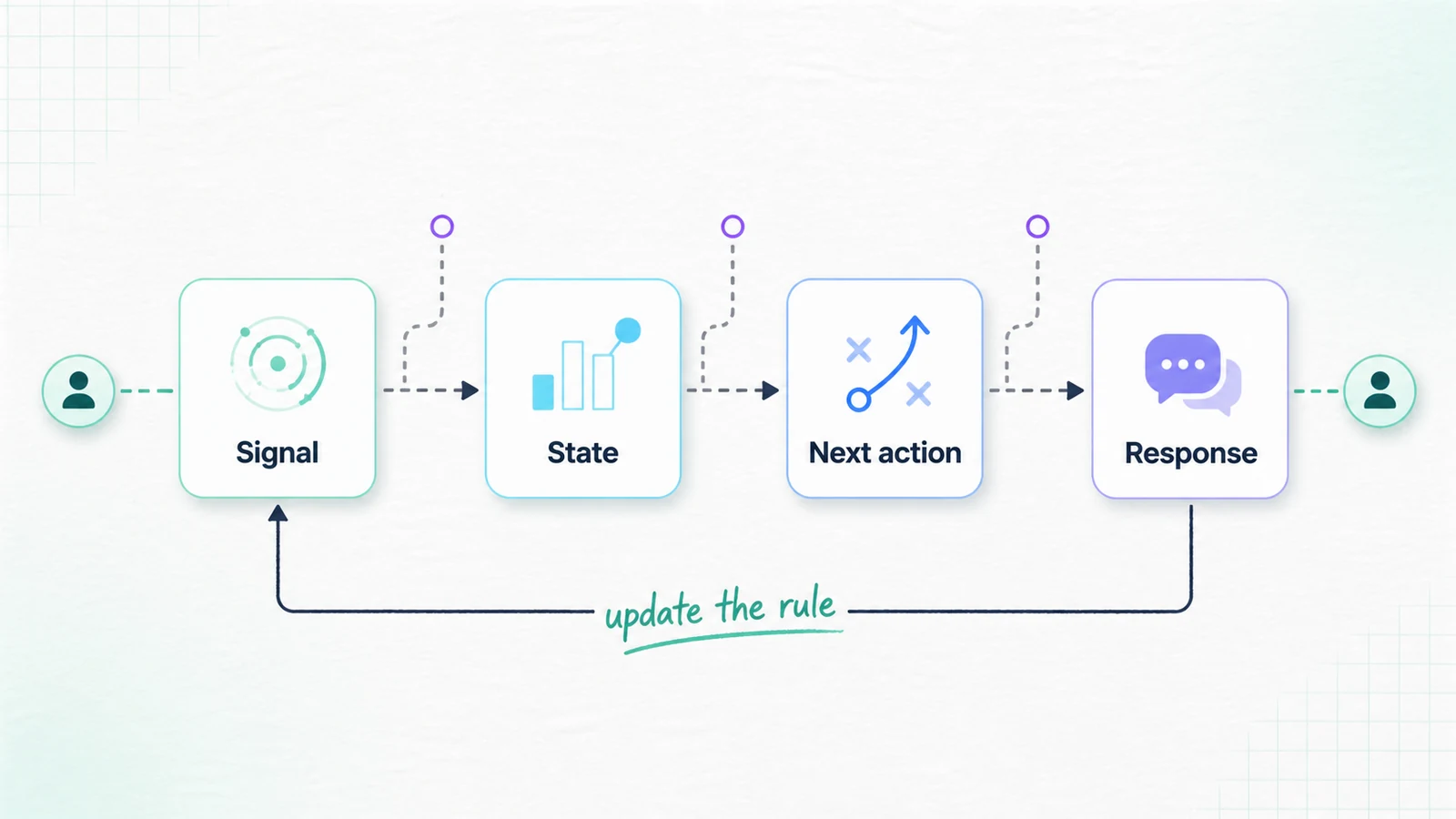
Start by defining a small set of meaningful states. The names matter less than the decision attached to each state. A stage should change the message, offer, channel, owner, or timing.
Next, define the signals that place an account in a state. Signals can include signup, activation, product usage, purchase, support activity, renewal date, expansion behavior, or inactivity. Use observed behavior where possible instead of assuming intent from one click.
Then assign the next useful action. A new user may need setup guidance. An activated team may need an advanced use case. An account with falling usage may need diagnosis before it receives an upgrade offer.
Finally, measure whether accounts move toward the intended outcome. Acquisition programs may track qualified conversion. Customer programs may inspect activation, adoption, churn rate, expansion, or NRR. The response becomes a new signal and can change the rule.

SaaS example
Imagine a reporting product with a free trial. A new user receives a short setup sequence tied to connecting a data source. Once the user publishes a report, the account enters an activated state and receives collaboration guidance instead of more setup prompts.
If several teammates join, the account may receive governance education and a path to a team plan. If activity drops, the next action should investigate the missing habit or blocked use case. Sending the same upgrade campaign to all four states would ignore the information already available.
Common mistakes
One mistake is treating lifecycle marketing as a fixed campaign calendar. Dates matter, but behavior should be able to change the path.
Another is creating too many stages. If two labels produce the same next action, they may not need to be separate.
A third is automating before definitions are stable. Bad stage logic sends precise messages to the wrong accounts.
Lifecycle marketing is strongest when every stage earns its place through a decision. The label is administrative until it changes what the company does next.