


What is usage-based pricing?
Usage-based pricing calculates a customer's charge from measured consumption of a product or service. The unit might be an API request, a gigabyte stored, a minute processed, or a transaction. A defined rate converts the eligible quantity into a charge.
The unit and the counting rule matter as much as the price. Two products can advertise the same per-request rate while treating retries, failed requests, minimum commitments, and included allowances differently.
Why usage-based pricing matters
Consumption-based charges let spending change as customers use more or less of a product. For a small buyer, that can reduce the commitment required to begin. For the vendor, revenue can grow with adoption without requiring a separate seat purchase.
That makes the model relevant to product-led growth. However, an accessible starting point does not make every future bill predictable. Buyers still need a way to estimate spending before expanding usage.
Usage pricing is one option within a SaaS pricing strategy. It charges for consumption, not necessarily a successful business result. Processing a request can be billable even when the buyer does not get the answer they hoped for, if the published policy says so.
How usage-based pricing operates
Choose a unit customers can recognize. State exactly which event creates usage, how quantity is measured, and which events are excluded. Define whether the total is a sum across the period, a peak amount, or another agreed aggregation.
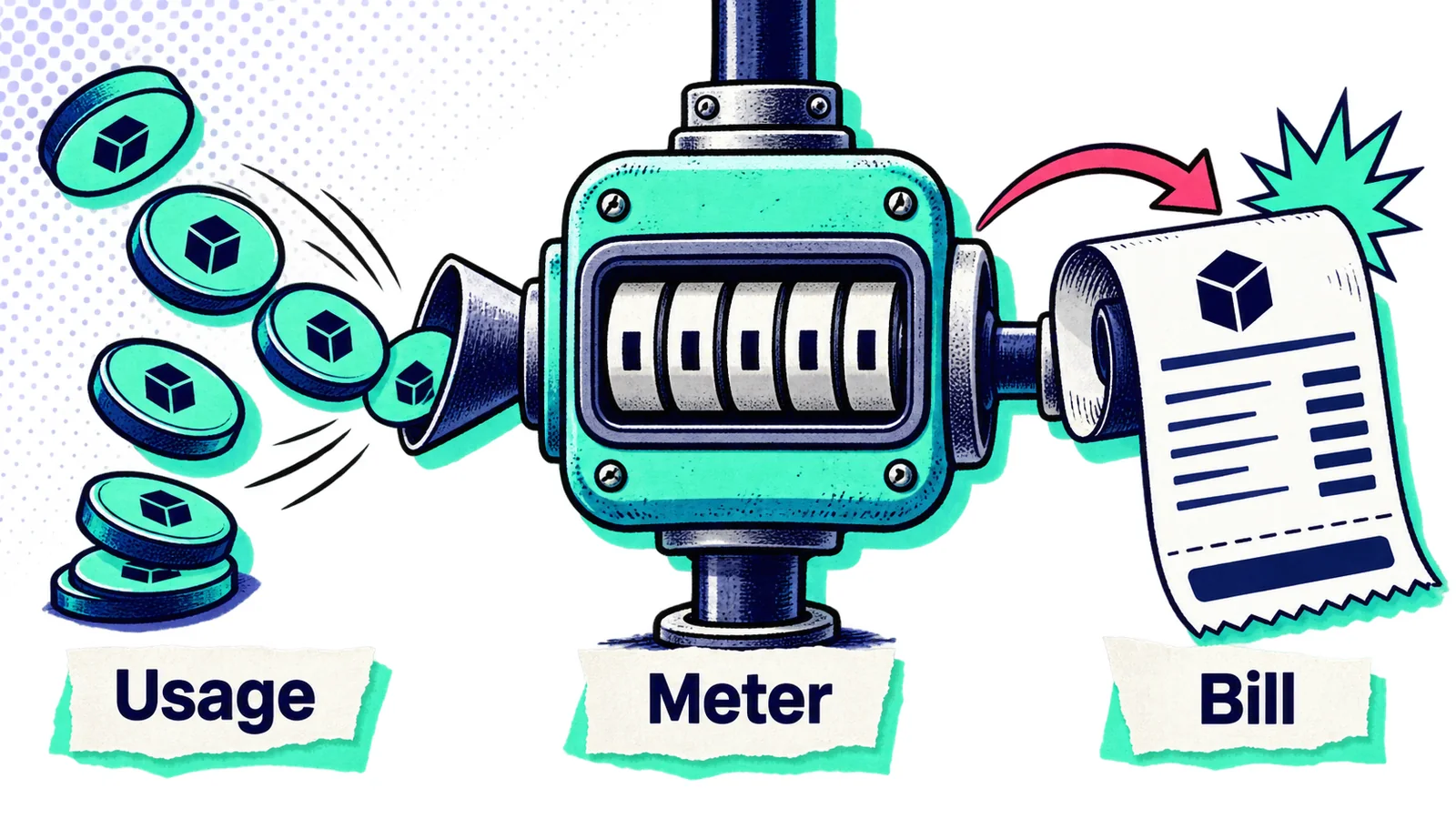
Metering records consumption against the correct customer. Events need enough identity and timing information to prevent accidental duplication and place usage in the right period.
Rating applies the price rule to eligible usage. A simple model multiplies units by one rate. Tiered rates, prepaid credits, included allowances, and minimum commitments add other rules that must be visible to the buyer.
Invoicing then presents the charge and supporting quantities. Payment timing is a separate choice: customers may prepay, receive an invoice afterward, or use a subscription that includes metered components.
Give customers usage visibility before the invoice arrives. Explain alerts, optional spending controls, and what happens if a limit is reached. An alert that merely sends an email is different from a hard cap that stops consumption.

A SaaS example
Imagine an illustrative API service charging $0.002 per billable request. Its policy counts accepted production requests and excludes automatic retries.
A customer generates 80,000 eligible requests during the period. The usage charge is $160. If the logging system also recorded 5,000 excluded retries, those retries should remain visible for troubleshooting without increasing the bill.
Suppose the customer doubles eligible consumption next month. At the same rate, the charge doubles too. That can create expansion revenue, but only while the customer continues consuming the product. The vendor should not treat a temporary usage spike as a permanent commitment.
This example uses a flat rate and no minimum. Adding either a minimum commitment or a base subscription would change the customer's obligation.
Common mistakes
The first mistake is choosing the easiest event to count without checking its connection to buyer benefit. Background activity can inflate usage while delivering little visible value.
The second is making customers discover exclusions and overages on an invoice. Sales, product, and RevOps need the same operational definition of a billable unit.
The third is confusing a consumption forecast with a contractual guarantee. Usage can fall when a customer's activity changes, even if the account remains satisfied.
A credible usage price has a meter the customer can reconcile. Before testing the rate, ask a buyer to predict their bill from a realistic activity sample. Any disagreement identifies a counting rule that needs clarification.
For more practical consumption pricing guidance, join the newsletter below.