


What is a value metric?
A value metric is the unit a company uses to scale a product's price with the value customers receive. In SaaS, examples include active seats, processed transactions, stored data, or accounts served. It answers a specific pricing question: what does the customer pay per?
The unit is a proxy for value, not a complete measurement of customer benefit. A billed transaction can be easy to count while the economic importance of individual transactions varies.
Why a value metric matters
Choosing the unit changes how revenue grows, how customers adopt the product, and which activities increase their bill. A price per seat creates different incentives from a price per account processed.
The decision comes before setting the amount. Debating $10 versus $12 is premature if buyers reject the thing being counted.
A value metric also differs from a value proposition. The proposition explains the customer's reason to choose the product. The metric determines the unit used to scale its price.
It is not the same as an operating KPI. A team might track retention or activation to evaluate the business without charging customers per retained account or activation event.
How a value metric operates
Start with the customer's benefit. Identify what becomes more valuable as the customer uses the product: more people collaborating, more transactions processed, or more customer accounts served.
Propose units that reflect that benefit. For each candidate, ask whether buyers understand it, can estimate it, and consider it reasonable to pay for. Then check whether the product can measure the unit consistently.
Test across your ICP, not just the largest customer. A metric that fits one segment can distort another. Seat pricing may suit a collaborative product while underrepresenting an automated process used by a small central team.
Keep the unit separate from the pricing model. The same transaction unit could be sold at a flat per-unit rate, through volume tiers, or inside a subscription allowance. Billing monthly rather than annually changes timing, not the underlying unit.
A broader SaaS pricing strategy connects these decisions: unit, rate, packaging, and commercial terms.

A SaaS example
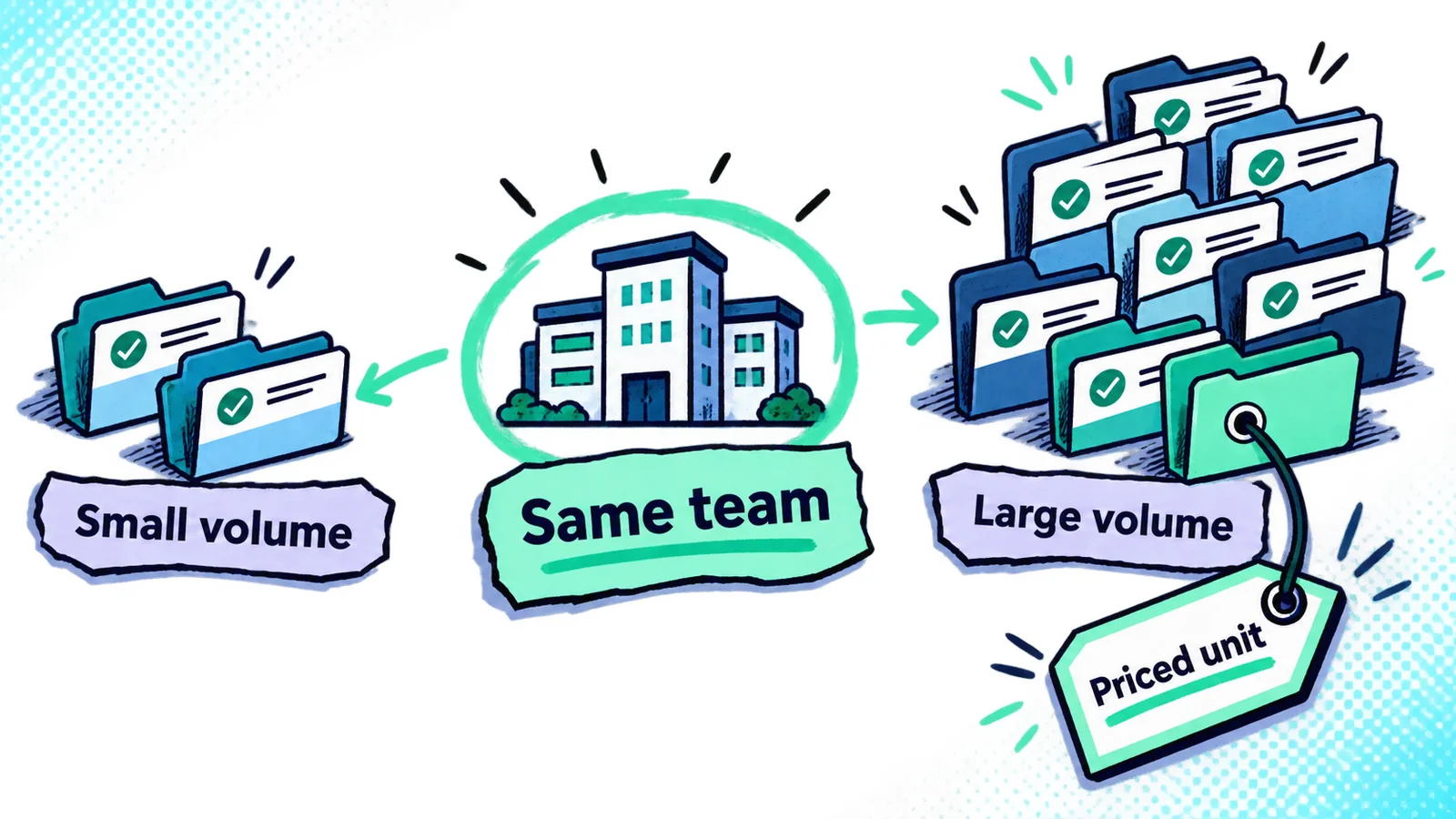
Imagine an illustrative reconciliation product. A finance team uses it to reconcile customer accounts. The number of employees using the interface remains stable while the number of accounts handled increases.
The vendor compares two possible units: seats and active accounts reconciled. Seats are simple to administer, but they may not reflect the increasing scope of the customer's use.
Active accounts reconciled could be a better candidate if buyers recognize the unit and can forecast its volume. The vendor must still define active, explain whether an account is counted once per period, and prevent repeated processing from creating duplicate charges.
This does not prove that account volume is always the right metric. A business handling a few unusually complex accounts might value the product differently. Customer interviews and billing simulations should expose that mismatch before rollout.
Common mistakes
Choosing a unit only because it tracks infrastructure cost can confuse customers. Internal processing steps do not necessarily represent a benefit buyers recognize.
Another mistake is copying a competitor's metric without checking the buyer, use case, or product behavior behind it. Similar-looking products can create value in different ways.
Making the meter so sensitive that customers avoid useful adoption can also weaken the commercial model. A useful path to expansion revenue should remain understandable as the customer's scope increases.
Choose the unit before arguing over the amount. Ask buyers to explain why their bill should rise when that unit increases. Their answer will reveal whether the metric reflects a benefit they recognize or merely a quantity your system can count.
For more practical pricing metric guidance, join the newsletter below.