


What is lead reactivation?
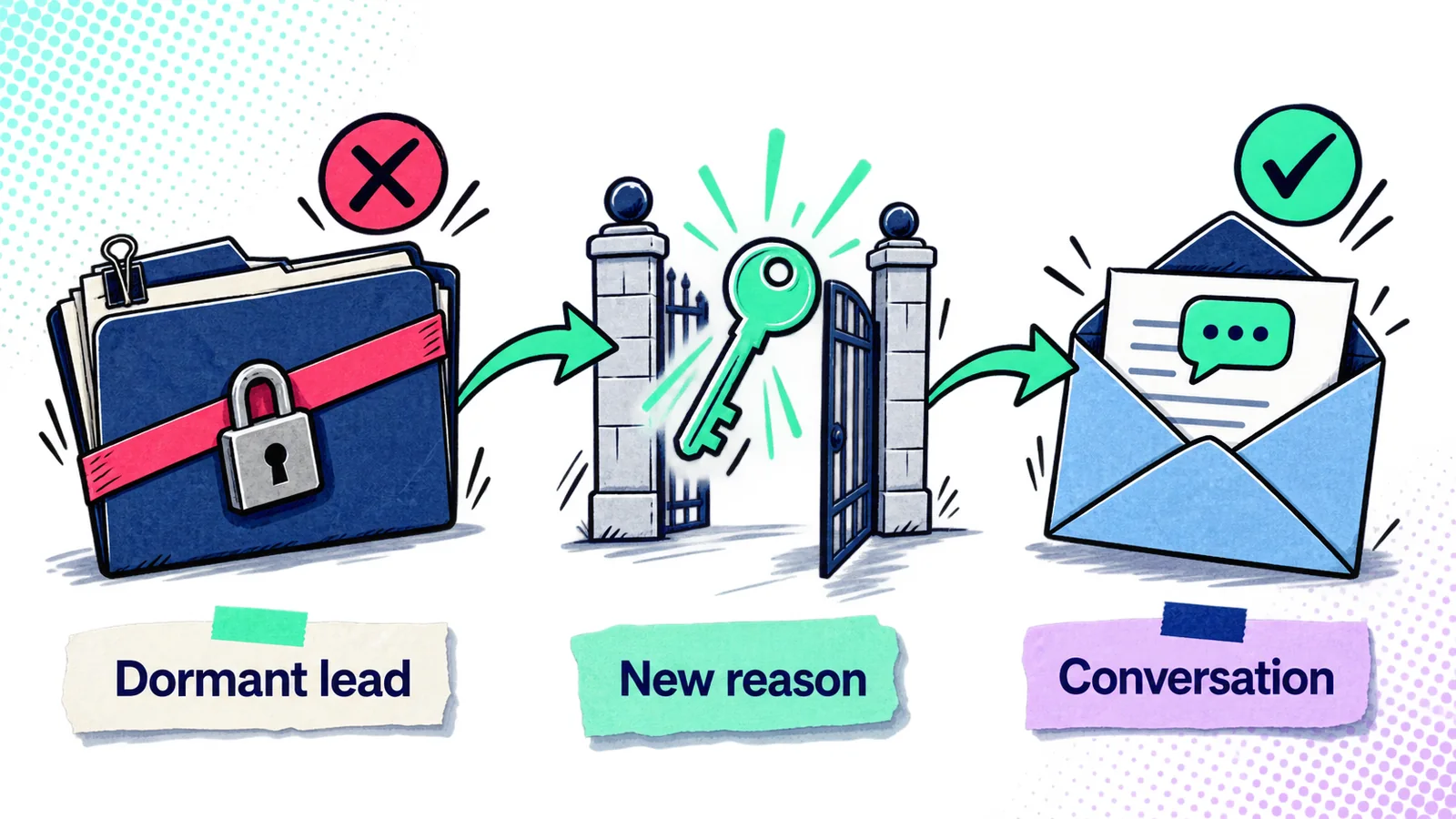
Lead reactivation is the process of restarting a relevant commercial conversation with a previously engaged prospect whose activity has stopped. It uses the earlier relationship, the reason for inactivity, and current context to decide whether another conversation is appropriate.
The prospect may never have reached an opportunity stage. Reactivating that lead is different from reopening a closed-lost deal, continuing routine nurture, or winning back a former paying customer.
Why lead reactivation matters
An earlier conversation can contain useful context: the problem, required capability, buying timeline, or reason the prospect paused. That context can make a new message specific without requiring the team to begin discovery from nothing.
However, old interest is not current qualification. The contact may have changed roles, the company may have solved the problem, or the original project may no longer exist.
Lead scoring can help identify candidates for review, but a score increase alone does not establish a reason to contact them. The team needs a current, relevant explanation for restarting the exchange.
How lead reactivation operates
First, define inactivity in relation to the buying motion. A prospect waiting for an agreed budget date is different from someone who has ignored repeated messages. Do not force every quiet record into one campaign.
Review eligibility before outreach. Confirm the contact's current role, record accuracy, subscription preferences, and applicable outreach permissions. Exclude unsubscribed, suppressed, invalid, or clearly unsuitable records from the campaign.
Next, identify what changed. A previously missing integration may now be available. A stated contract-renewal window may be approaching. Relevant intent data may justify investigation, but it should not be presented as knowledge of a private buying decision.
Connect the message to the recorded pause reason. State the verified change, explain why it may address the earlier requirement, and ask whether that requirement remains current.
Then define the response path. A substantive reply can trigger sales discovery and fresh qualification. A decline, an unsubscribe, or continued silence should lead to the appropriate stop or suppression decision.

A SaaS example
Imagine an illustrative reporting product. A prospect evaluated it but paused because a required CRM integration was unavailable. The seller recorded that reason and did not create an active opportunity.
The integration later becomes available. Before contacting the prospect, the seller verifies the release, checks whether the contact still owns reporting, and confirms that outreach is permitted.
The message refers to the earlier requirement and asks whether the integration is still relevant. It does not imply that the prospect has already decided to resume buying.
If the prospect replies that the requirement remains and agrees to discuss it, the lead is re-engaged. The seller still needs to confirm priorities, stakeholders, and timing before adding a qualified opportunity to the sales pipeline.
If no reply arrives after the planned limited follow-up, the sequence stops. The new capability created a reason to ask, not an obligation for the prospect to respond.
Common mistakes
Calling an email open a reactivated lead inflates reporting. Define the success event in advance, such as a substantive response or an accepted discovery conversation, and separate it from downstream opportunity creation.
Sending the same discount to every dormant record ignores the original reason for inactivity. A missing capability, poor fit, and a postponed budget require different decisions.
A sales cadence also needs an end condition. Repeatedly recycling nonresponders without new context can damage the relationship.
A fresh reason to talk matters more than the age of the record. Measure whether reactivation produces relevant conversations and newly qualified opportunities, while preserving clear stop rules for everyone else.
For more practical prospect re-engagement guidance, join the newsletter below.