


Deal desk
A deal desk is a cross-functional function and approval process for complex or nonstandard commercial deals. It helps a sales team resolve questions about pricing, discounts, contract terms, payment structure, product commitments, security, implementation, and delivery risk before a quote or agreement reaches the buyer.
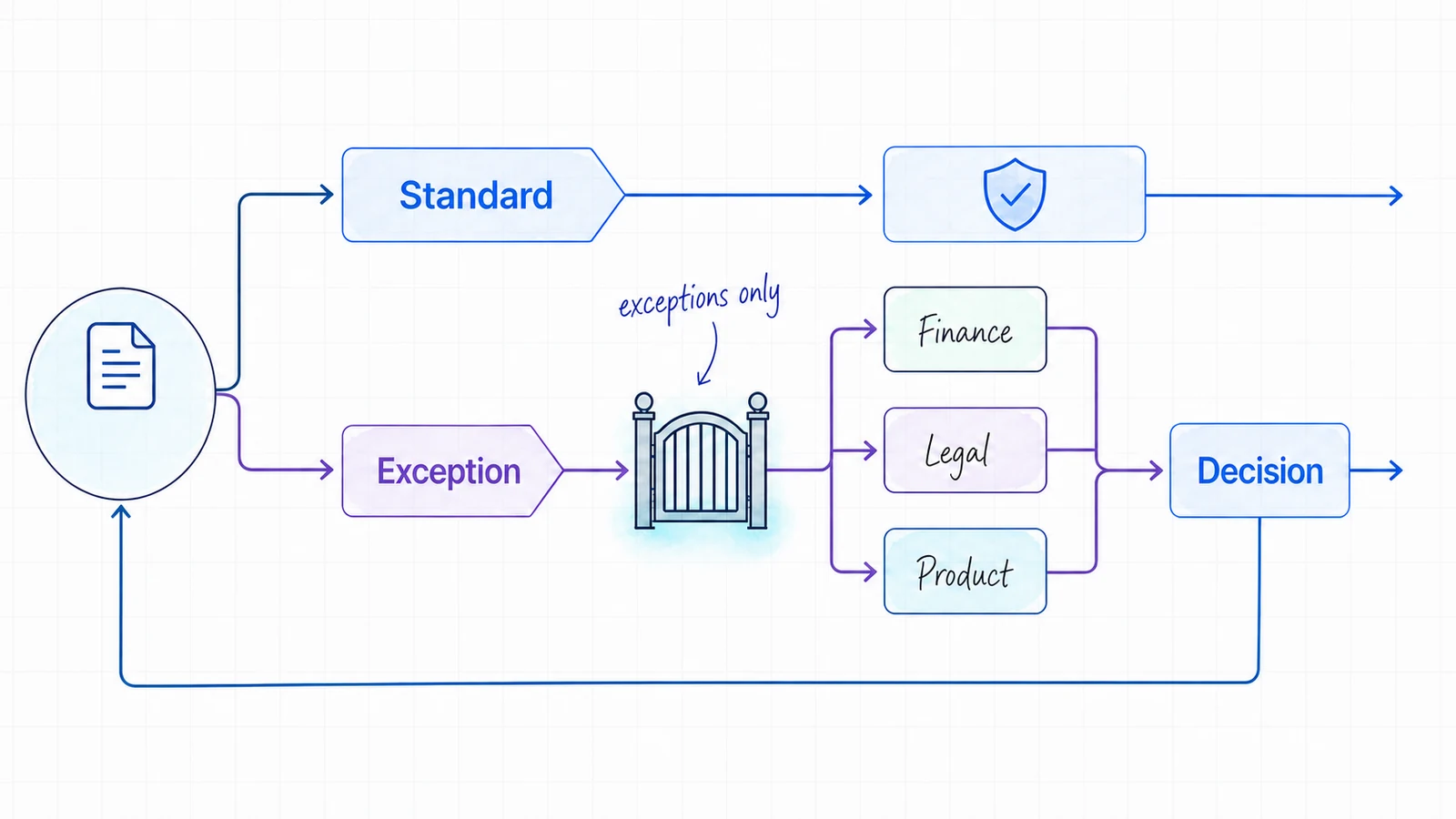
The desk is not one permanent committee that reviews everything. A useful model routes each exception to the person who holds the relevant decision right. Finance may own discount or payment approval. Legal owns contract risk. Product owns roadmap commitments. Operations owns process and record quality.
Why a deal desk matters
Complex SaaS deals create trade-offs across teams. A large discount may help a rep win the opportunity while weakening margin. A custom integration may increase ACV while creating an obligation the product team cannot support. Unusual payment terms may affect cash planning or revenue treatment.
Without a defined path, the rep chases answers across messages, meetings, and documents. Reviewers see incomplete context, decisions conflict, and the close date in the sales pipeline becomes unreliable.
A deal desk gives those exceptions one intake route, a clear owner, and a record of the decision. Standard deals should continue through preapproved rules without waiting for the desk.
How a deal desk works
The process begins with an entry rule. Common triggers include a discount above policy, nonstandard contract language, unusual billing, a custom product request, a high-risk security term, or a delivery commitment outside the standard offer.
The seller submits a complete deal packet. It should include the customer context, proposed terms, commercial value, requested exception, business reason, deadline, known risks, and the exact decision needed.
The desk then follows a short route:
- Triage the request and reject missing information.
- Send each issue only to the required decision owner.
- Record approval, rejection, or a conditional alternative.
- Return the decision to the seller and update the quote or contract.
- Capture recurring exceptions so policy can improve.

RevOps may design the intake, routing, and data model, but the deal desk is narrower than RevOps. It focuses on individual commercial decisions. RevOps also covers forecasting, lifecycle definitions, systems, reporting, and cross-functional revenue process.
SaaS example
An account executive is negotiating a multi-year analytics contract. The buyer asks for a large first-year discount, quarterly billing, a custom security clause, and an integration that is not on the current roadmap.
The rep submits one packet. Finance evaluates the discount and billing. Legal reviews the clause. Product assesses the integration. The desk returns an approved discount range, revised payment terms, acceptable legal language, and a supported alternative to the requested integration.
The result is not simply "approved" or "rejected." It is a commercial structure that the company can deliver. Clear routing also protects sales velocity by preventing the same request from moving through several disconnected conversations.
Common mistakes
The first mistake is sending every deal through the desk. That turns exception handling into routine administration.
The second is accepting incomplete requests. Reviewers cannot make a fast decision when the rep has omitted the customer context, requested term, or deadline.
The third is letting the desk advise without assigning decision rights. Collaboration is useful, but each exception still needs one accountable approver.
How we see it
A deal desk should reduce ambiguity, not centralize every commercial choice. Its quality shows up in clear thresholds, complete inputs, named decision owners, and a standard path that remains fast because only real exceptions leave it.